"Straight Outta Compton" Review

OP-ROB RATING: STARTER
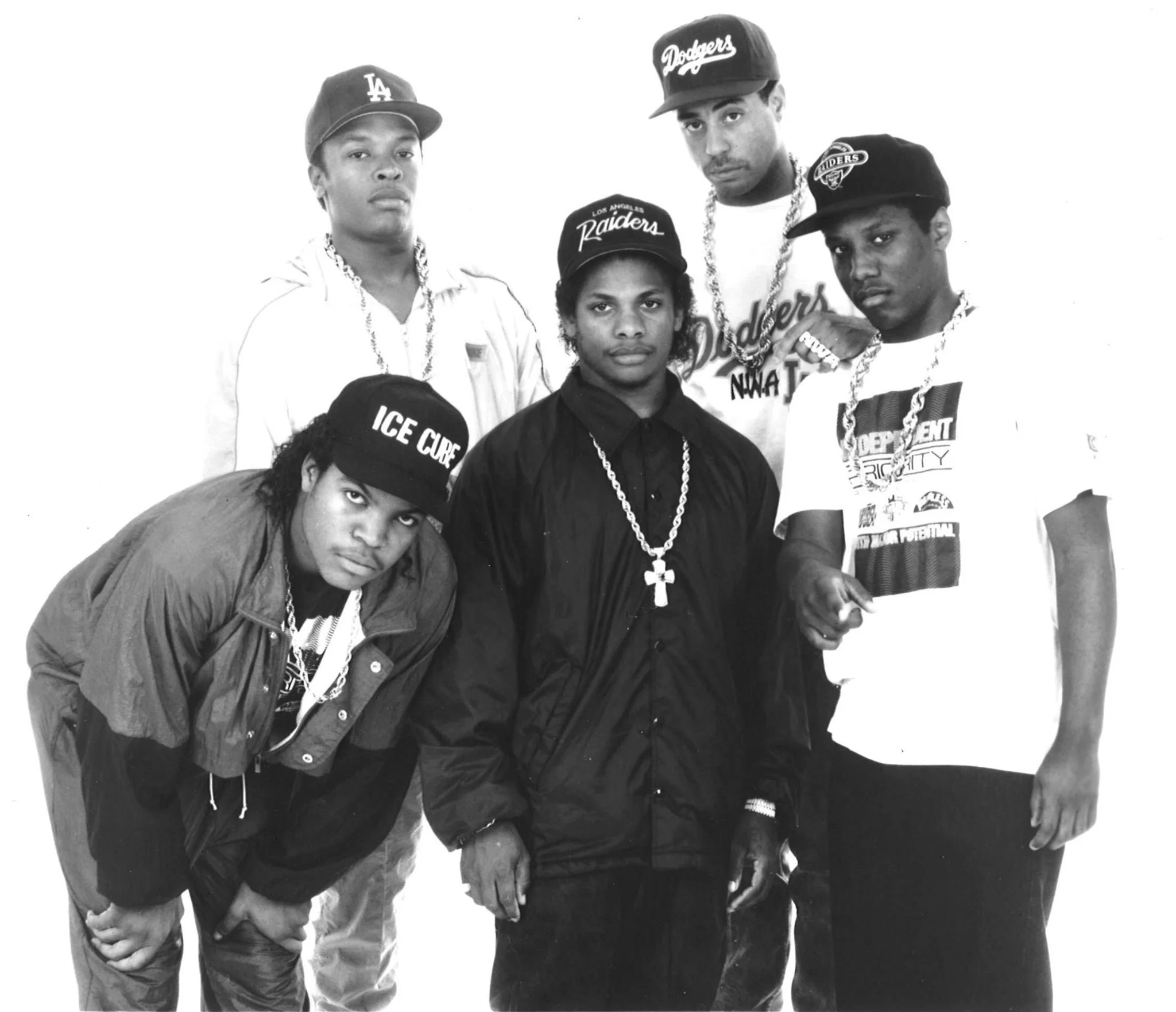
“Straight Outta Compton” is a biopic directed by F. Gary Gray about the infamous rap group, N.W.A. Gray’s first priority in “Straight Outta Compton” is introducing each member of the group. Eazy-E (Jason Mitchell) is presented in a high-octane scene staged in a crack den. Ice Cube (O’Shea Jackson Jr.) makes his first appearance in a prolonged and equally intense scene on a school bus where he is jotting lyrics in a notebook looking at what is going on all around him. Fittingly, we first meet Dr. Dre (Cory Hawkins) lying on his bedroom floor, jamming out to records with some headphones on. MC Ren (Aldis Hodge) and DJ Yella (Neil Brown Jr.) both appear in club scenes non-central to their own characters.


As we follow the group’s rise to fame and subsequent implosion, we get to see how the album “Straight Outta Compton” came into being with several scenes in the studio. We get a glimpse of the group’s hectic life on tour involving run ins with the police as well as hotel room shenanigans with topless women and plenty of guns. Another major component is the presence of Jerry Heller (Paul Giamatti), the group’s controversial manager. As a result of contract disputes and weak friendships, N.W.A. crumbles and the film breaks into three different storylines. One is that of Ice Cube and his solo career. Next is that of Eazy-E and his relationship with Heller and ultimately his life-ending battle with AIDS. Lastly is the story of Dr. Dre and his relationship with Suge Knight (R. Marcos Taylor) and Death Row Records. MC Ren and DJ Yella simply fade into the background.


“Straight Outta Compton” is entertaining, well acted and interesting enough to land on as a random movie while flipping channels. But a greater meaning is missed, and vital questions left unanswered. Gray chooses to take many different paths, and by doing so, commits to none of them. The story of N.W.A. can’t fit into two-and-a-half-hours; there are simply too many important characters. Gray explores two of them with extreme brevity, and gives the audience just a taste of what happened to the three more prominent members. In all reality, this topic should have been documented in a miniseries if the goal of giving each character his due was to be fulfilled.


Some of the most important events were left half-baked. Ice Cube releases two solo albums in what seems like five minutes, while Suge Knight bursts onto the scene as an unknown to the audience. In an instant Eazy-E loses what seems to be all of his money, and his trust with Jerry Heller is shattered over reasons that are barely referenced and never fully explained. I still don't know what the hell-er happened!


Gray is at his best in the opening scene introducing Eric “Eazy-E” Wright rolling into a crack den to collect on some unpaid debts. At this point Eric is a drug dealer, and this is simply part of the job. The location of this scene is Compton, an area in Los Angeles known for its poverty and crime. For the viewer, this house is a nightmare; a dilapidated shack filled with sweaty drug addicts, graffiti and empty 40s. For Eric, this apartment is commonplace; it is part of his reality. In many ways this particular scene feels bigger than itself. There is an atmosphere of desperation and frustration in the house, and more broadly in the streets of Compton. Gray manages to establish Eazy-E as a character, while showing us the overall surrounding.


A prominent element in the film is the tumult in and around Los Angeles during the time period. There a several scenes depicting police brutality, unfair arrests and mounting tensions. Gray also chooses to show footage of the Rodney King beating and the subsequent trial and riots that followed. N.W.A. was the voice of one side of these events, yet the narrative never explores the bigger picture.


In this iconic photo from the riots in Ferguson, Missouri you can clearly see a group of police officers taking aim at a black man with his arms up. Also in the photo is a subtle, yet powerful indication of the influence of N.W.A., the lyrics "Fuck tha Police" spray-painted onto a mailbox in the background. No matter where you stand on race issues, no matter your political beliefs, one thing is undeniable: N.W.A. struck a note of frustration that is still prevalent today. Their lyrics are a testament to their "reality” and they still echo. It is unfortunate that "Straight Outta Compton" settles for amusing yet unfulfilled storylines instead of tapping into the soul of the same nightmarish realities that haunt America today.

"Trainwreck" Review

OP-ROB RATING: ALL-STAR

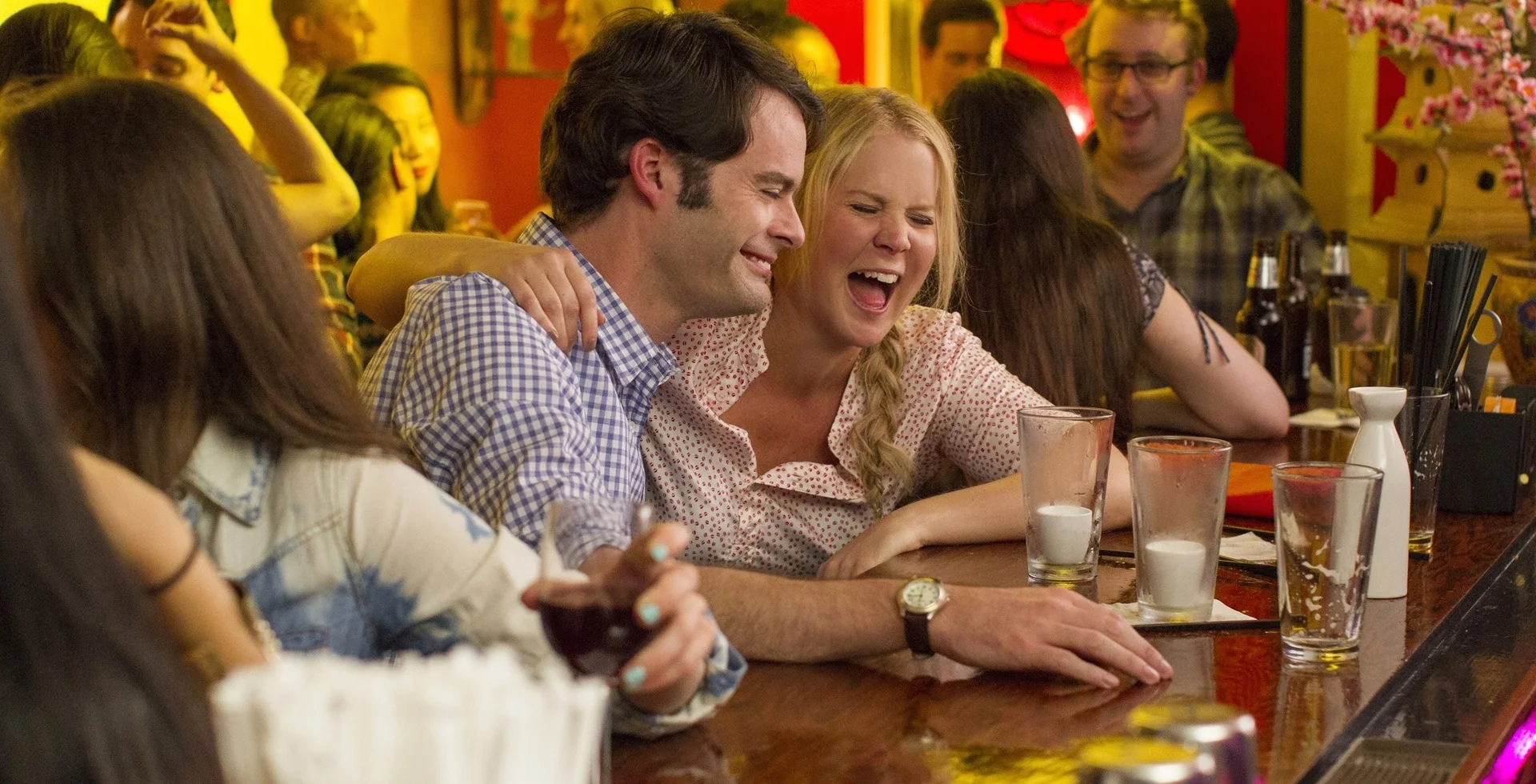
           “Trainwreck”, the latest film from Judd Apatow, is the story of a woman who believes that monogamy isn’t realistic. This woman is Amy Townsend (Amy Schumer), she works as a writer for “s’nuff”, a trashy men’s magazine located in NYC; and what seems to be most nights she parties at bars and clubs, usually ending up in a random man’s bed. But don’t be fooled into thinking that Amy is being taken advantage of, because she is completely in control of her lifestyle. Her routine is this: get manageably drunk at the bar, go home with the sexiest guy, have whatever kind of sex feels right that night, and never ever sleep over once it’s done. For Amy, this works perfectly. She never has to call the guy again and she always gets exactly what she wants. All this seems to be very satisfying for Amy, that is until she meets Aaron Conners (Bill Hader), a sports medicine doctor, and her entire belief system is turned on its head.


            “Trainwreck” is the first movie directed by Judd Apatow starring a female lead in Amy Schumer. Amy Schumer also wrote the screenplay, her first ever for a movie. For all those irregularities, “Trainwreck” doesn’t feel all that different from Apatow’s earlier films, “Knocked Up”, and “The 40-Year-Old Virgin”. Though it doesn’t break new barriers or rewrite the rules of comedy, the film is laugh-out-loud funny, incredibly vulgar, and in the end, very tender and thought provoking.


            Amy Schumer takes on the all-important job towing the line between being funny and disgusting. “Trainwreck” is filled with everything from dirty tampon jokes to a scene where Schumer’s character describes fishing a marooned condom out of her vagina to a group of stunned housewives. Some of the more inappropriate scenes are a little uncomfortable to watch, but like all good comedies the punch line is frequently worth the pain. Bill Hader also delivers a great performance as the innocent and sincere sports medicine doctor. While I don’t completely understand his desire for the “trainwreck” of a human being that Schumer portrays, his body language and thoughtful dialogue in the film make it very convincing.


            For the most part, Apatow focuses on developing the characters of Amy Townsend and Aaron Conners, however there are a slew of noteworthy supporting characters. Brie Larson plays Amy Townsend’s sister who has chosen a more responsible lifestyle by getting married and having a child. The scenes between the two sisters often feature tension and provide opportunities for Amy to mature and strive for resolution. An equally compelling foil is the Townsend’s father, Gordon (Colin Quinn). The opening scene of the film is actually dedicated to Mr. Townsend telling his children about why he and their mother are getting a divorce, ultimately leading to him explaining that monogamy isn’t realistic. The dynamic between Mr. Townsend and Amy is one if the most interesting parts of the movie. At s’nuff magazine, Tilda Swinton plays Amy’s eccentric boss who represents the corrosive personality that the early version of Amy is on the road to becoming.


            Of all the best parts of “Trainwreck” one particular role stands out from the rest, this is LeBron James. In the film, LeBron plays a close friend of Dr. Conners and is featured in significant portion of the film. LeBron looks right at home on screen, and his scenes were by far the most enjoyable. In one hysterical scene LeBron and Dr. Conners discuss the difference between Cleveland and Miami, LeBron wryly states, “There is no difference.” While LeBron still has a quite a few years to play basketball, his performance in “Trainwreck” should afford him the opportunity to “take his talents” to the silver screen as a second career.


            Despite the overall quality of the film, there are many scenes that seem unnecessary, and sometimes too obscene to have any positive effect. One particularly unfunny scene occurs when Amy goes home with a sixteen-year-old intern from her office. They have a strange sexual encounter that is gross, weird, and worst of all just not clever in any way. There are also many lewd quips delivered by Schumer that feel forced, and are often not at all amusing. Finding a balance in a raunchy comedy like “Trainwreck” must be incredibly challenging, however striking that perfect chord is vitally important to making an all-time-great. “Trainwreck” doesn’t quite make the leap, though it will find its place as an often revisited, hugely entertaining comedy that often has a sweeter side than the initial behavior of its main character might suggest.


"Amy" Review

OP-ROB RATING: LEGEND

             “Amy” is a documentary directed by Asif Kapadia, the same man behind the award winning film "Senna". The documentary masterfully unfolds the heart-wrenching story of the late singer, Amy Winehouse, and does so with great reverence toward the artist, and more importantly the person.


            Much of the documentary is focused on the music of Amy Winehouse. The lyrics to her songs are displayed on the screen in subtitles of her own handwriting. Kapadia makes sure the audience realizes just how reflective Amy’s music was of what was going on in her life. Listening to one of her songs is akin to delving into the private diary of a troubled girl. We see her life story through home movies and the lens of the paparazzi; her music provides the narrative.


            What I found most moving about Amy Winehouse was her unconditional love. Love for a husband that introduced her to toxic addictions, squandered her money and left her repeatedly for another girl. Love for a father that, at the very least, was too busy enjoying and insuring Amy’s financial success, to care for her physical and emotional wellbeing. Love for a series of managers and promoters that would go so far as to put her on stage wasted rather than cancel a show.


When I initially saw the trailer for “Amy” I had my doubts. I thought to myself, “Well its great that she had this sweet side, but what about the partying and the bawdy image she made for herself? Isn’t that her fault?” After seeing “Amy” I can say that the self-destructive behaviors and bad-girl brand may have simply been byproducts of the people around her. Perhaps none of those things were done out of selfishness, publicity or personal pleasure. As Kapadia would have us believe, Amy Winehouse sought only to love those around her and it was her unrelenting investment in those she loved that ultimately killed her. He illustrates a very convincing argument.


 The start to Amy’s downward spiral came when her true friends left her side. These friends included her former manager Nick Shymansky and two of her childhood girlfriends, Juliette Ashby and Lauren Gilbert. Throughout the entire film it is clear that these three individuals were the only people that loved Amy with no strings attached. Why she distanced herself from these people is a question that the audience is left to explore. Perhaps Amy Winehouse's greatest flaw was her inability to identify the people who were truly good for her until it was too late.


One important revelation I gained from the film was just how emotional Amy Winehouse was as an artist. The words in her songs were written in blood, and I can only imagine how painful it was for her to perform them sometimes. One of the more tender scenes in the documentary comes when Amy starts recording with one of her music idols, Tony Bennett. In this scene Amy is nervous, sober, and at her very best as a singer. She botches the first take on a duet with Bennett, but after the living legend offers some gentle words of encouragement, she rises above and beyond the occasion.  Although “Rehab” was the song that put Amy Winehouse on every front page in America, she was a jazz singer at heart. The music of Amy Winehouse wasn’t meant for massive crowds or wild music festivals, but instead for small venues where people could quietly listen and experience the clarity of emotion that beamed through her music. The scene with Bennett affirms her rightful place in jazz music, as Bennett himself later said, "the great ones that are very talented know just how to turn jazz singing into a performance that's unforgettable. And Amy had that gift."


 In one of the final scenes Amy is booed off the stage at a show in Belgrade; a show she was forced into by her management. In the all of the disappointment and calamity in the crowd, there is also a sense of spectacle. As if the sight of Amy stumbling around in sheer drunkenness were entertaining. For many people, this will be the Amy Winehouse that is remembered, a considerable talent that succumbed to substance abuse and pursuit of celebrity in the public eye. That is why I am glad that Asif Kapadia was able to provide a different view of Amy Winehouse in “Amy”. Instead of looking at the glitz, lunacy, and horror of Amy’s short stint at the top of the music world, he focuses on her time before the spotlight. When supportive and loving friends surrounded her, a time when she played her music for small crowds who were awed by her performances.


For those who decide to see “Amy”, a new person with a familiar face will emerge to be remembered . A woman so brilliant at singing that she ranks among the most gifted to ever pick up a microphone; a kind, yet haunted soul who gave her all for those she loved. 

"True Detective" Season 2 Episode 1 Review

OP-ROB RATING: STARTER

An avid “True Detective” fan told me that while he was excited for the new season, Matthew McConaughey and Woody Harrelson just couldn’t be beat; Detective Rust Cohle and Marty Hart were simply too perfect, and even the most impressive cast and new story wouldn’t match the previous season. Season 2 premiered last night, and it confirms what my friend pointed out and what many would agree with: “True Detective” will not be the same.


            Episode One, “The Western Book of the Dead”, takes place in several cities in Los Angeles County, California; most prominently “Vinci” City and focuses on four different main characters. Frank Semyon (Vince Vaughn) is a real estate entrepreneur and a white-collar criminal, although we have reason to believe he has had a more hands-on, violent past. Ray Velcoro (Colin Farrell) is a police detective within Vinci City. As apparent from episode one, Velcoro was once an honest lawman but has sunken into depression, alcoholism, drug abuse and corruption after a family tragedy. Detective Ani Bezzerides (Rachel McAdams) is a similarly dark character. She isn’t corrupt, but may be an alcoholic and most certainly has family issues that contribute to her lone wolf, detached attitude. Finally, Officer Paul Woodrugh (Taylor Kitsch) is the cleanest of the bunch. He is dedicated to a fault, yet is clearly troubled by his past. His bodily scars and ex-military history are good places to look for his current post-traumatic symptoms within the show.


            These dark characters are all drawn together through the disappearance and murder of the Vinci City Manager, Ben Caspar. This particular character is not actually shown on screen with a pulse, however we can put together that he is involved with Mr. Semyon in orchestrating a sketchy, California railway deal. His disappearance causes issues for Semyon, who must convince investors of the proposition’s adherence with the state government.  Velcoro is assigned to investigate Caspar's disappearance by his commanding officer. When Velcoro searches Caspar’s house he finds a disheveled residence filled with pornographic artwork, sex toys, and a very creepy, Aleister Crowley inspired costume. Caspar’s body turns up on the side of the highway propped up on a park bench. The man to stumble upon him is none other than Paul Woodrugh, who pulls off onto the side of the road during an intense motorcycle ride in the pitch black of the night. He reports the corpse to the police; the episode ends with Velcoro and Bezzerides at the scene of the discovery.


            The episode is filled with a lot of character development. Much of which is dark and depressing. The plot moves fast and the viewer is challenged to catch every little shard of information that comes flying across the screen. The characters all seem to struggle with deep-rooted, emotional issues that will define the tone of the show.


            The creator and writer of “True Detective”, Nic Pizzolatto, knew what my friend knew. Any follow up to McConaughey and Harrelson would be a disappointment. Pizzolatto himself grew up in and around New Orleans; the first season of “True Detective” was so natural and automatic that any kind of extension would seem artificial and forced. For that very reason, Pizzolatto has decided to take the show on a veritably different path. The first episode features a similar opening to the old season, as well as the familiar panning landscape shots, except now the camera peers over Southern California instead of the Louisiana bayou. This new setting in California provides a fresh canvas, and the new characters are different colors for him to paint. I don’t know how the rest of the season will turn out. But after one episode I can say for sure that Pizzolatto’s writing is just as dark as before, the acting is just as good and the plot is far more cerebral. In all, “True Detective” is back and it’s a whole new ordeal. I can’t wait for the story to unfold.


"Mad Max: Fury Road" Review

OP-ROB RATING: BENCH

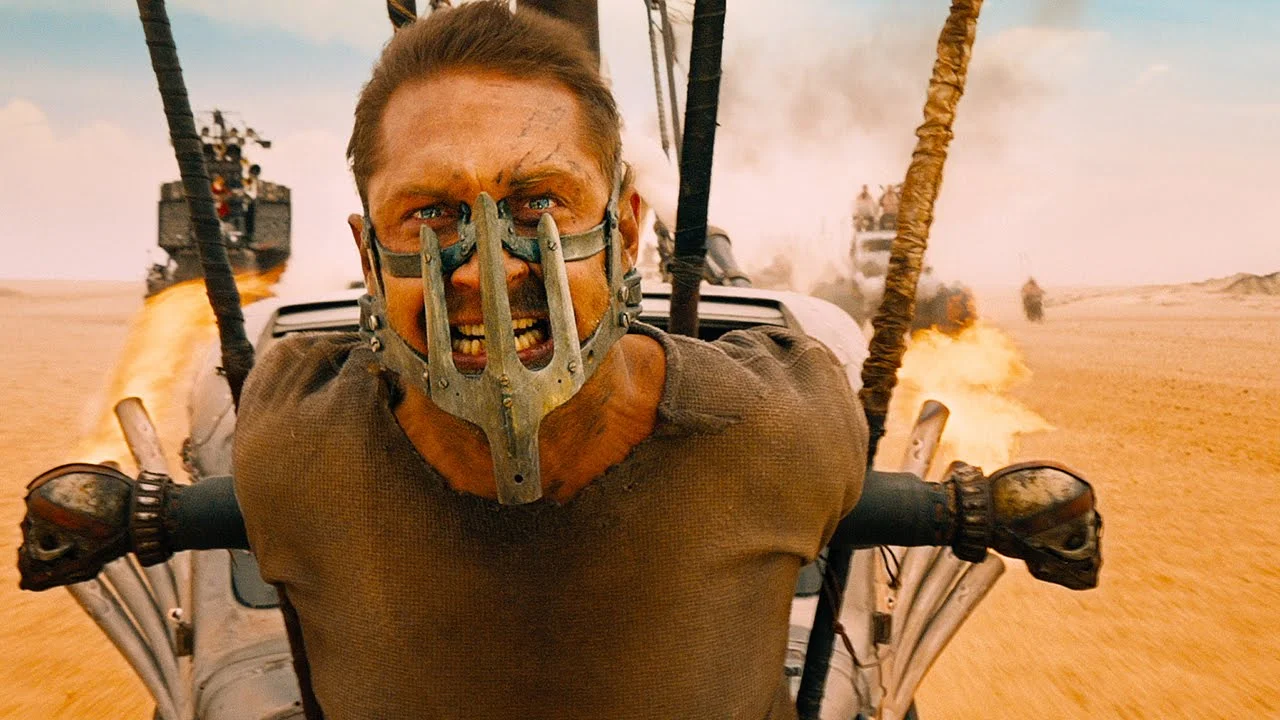
A whole lot of fury. Not. Much. Else....

About half way through “Mad Max: Fury Road”, Max leaves the overheated "war rig" and his band of survivors to try and save them from an oncoming enemy. This oncoming enemy happens to be a dune buggy packed with assailants armed to the teeth with machine guns and other weapons of destruction. Max departs carrying only his clothes and a can of gasoline. He walks down the road into the fog and out of view. A few moments later we see a large explosion and Max emerges back from the fog carrying belts of ammunition and a bag full of guns and more ammunition. What did Max do? How did he do it? The entire scene takes place off-camera and we are simply left to guess. If you walk into “Fury Road” expecting answers for every character and explanations for how this all came to be, then you will not enjoy the film. However, if you are a person who can stand back and just soak up the vivid imagination of director George Miller splatter onto the screen, then the reward will be all yours.


The last Mad Max film, Beyond “Thunderdome”, was released thirty years ago in 1985. The franchise began with the original “Mad Max” in 1979 and was followed by “The Road Warrior” in 1981. Obviously filmmaking has come a long way since those early years, and after seeing “Fury Road” it is clear that director George Miller has not missed a beat. The appeal of the early Mad Max films were in the epic road chases featuring Max battling crazy people. From 1979 to 1985 the franchise became increasingly weird. The energy-crisis setting from the first film deteriorated into a full-blown post-apocalyptic wasteland in the third, and the villain’s went from being normal human being psychopaths to being deformed freakish psychopaths. Regarding the earlier films, Miller has once again ramped up the weird in “Fury Road” and has injected more action and more special effects than ever before.


            Mad Max portrayed by Tom Hardy is a survivalist who “runs from both the living and the dead… a man reduced to a single instinct: survive.” As is apparent from the opening scene, Max is haunted by people he has failed to save and is visited by their faces in flashbacks throughout the movie. The backstory regarding the “Fury Road” version of Mad Max is barely explained. All we can really tell is that he has been in “the struggle” for quite some time. He has long scraggly hair and a Duck Dynasty beard and his iconic V8 Interceptor is a cobbled mess of what it was in the earlier films. The film’s opening is short and is narrated by Max as he explains basics of his situation. This narration is curtailed when Max has to flee from a group of enemies.  Max is captured and in the first few minutes of the movie the audience is boldly thrust into the hostile, derelict wasteland that George Miller has been dreaming up over the past thirty years.


            The guys who captured Max belong to a group known as “war boys” or “half-lives”. They are unhealthily skinny, bald, severely scarred and all look the same. These high-energy creeps serve Immortan Joe, lord of the citadel, in a cult-like fashion. For their sacrifice in his service and a glorious death in battle he promises them “You shall ride eternal. Shiny and chrome.” Joe is played by Hugh Keays-Byrne, who actually played the main villain in the original Mad Max. Clearly very old and in ailing health, Joe waddles around the in the top of his kingdom drinking fresh water and impregnating his “breeders”, beautiful women imprisoned in his lair. The citadel is this massive rock structure complete with an aquifer, hanging gardens, and a massive elevator operated by the “war boys”. The peasants of the citadel all mull around beneath the structure begging for water. Joe sometimes pours water down onto the people through two gargantuan faucets on the citadel, but cuts off the flow before anyone can really quench their thirst. The economy of this world is defined by fuel and water, both of which Joe has plenty. As you can imagine, logistics in a post apocalyptic wasteland can be quite dangerous, the road is wrought with marauders and rival armies. That is why Joe employs Imperator Furiosa (Charlize Theron) who drives a battle-ready big rig from town to town to conduct trade. In an act of mutiny, Furiosa helps the breeders escape the citadel and embarks on a journey to the “green place” where the women can live fulfilling lives. Joe freaks out and sends his entire army of War Boys after the big rig. Max comes along for the ride strapped to the front of one of the War Boys’ buggies. This particular War Boy is named Nux (Nicholas Hoult) and needs Max as a “blood bag” so that he has the energy to join in the chase.


            The setting for “Fury Road” is quite spectacular. However, nothing is really explained and we are left guessing about 95% of the plot and the characters. The timeline of the Mad Max films is not continued with Fury Road, and the backstory for the movie will actually be revealed in a series of comic books being released by DC comics. The world that Miller has created is intricately designed, intense, and undeniably unique. Everything from the War Boys down to the explosive tipped javelins they use in battle are unlike anything I have ever seen before in a movie. From the opening scene the pace is high and the action non-stop. For those people who are fans of the devastating car chases in the earlier films, “Fury Road” will be more than pleasing.


            On the other hand, “Fury Road” is not thoroughly explained at all. The plot is muddled, and too many of the characters prove only to be set pieces for the aura Miller is trying to create. Behind the carnage and weirdness Miller is trying to convey a message of environmentalism and feminism, yet neither idea is fleshed out enough to make any sense. By the end of the movie I felt somewhat misled, and unhappy with Max’s character development. Tom Hardy was more vocal in the role of Bane in “The Dark Knight Rises” than as Max Rockatansky in “Fury Road.” Perhaps none of those complaints matter though. Perhaps “Fury Road” needs no explanation. Perhaps George Miller has decided to show his audience that “yes” he can contend with Michael Bay in the area of special effects and that he can keep producing some of the most eccentric characters and pieces in film. If Miller’s goal was to deliver a movie that will be remembered for its action and not for its narrative heft, then he has certainly succeeded. However, as a member of a 21st century audience living in a time with complex and interesting issues, is a movie like “Fury Road” really worth watching? Can’t I find something that might expand my mind a little bit? Make me think in a new way about something? “Fury Road” makes subtle points regarding the role of women and the health of our planet, but just as Max fades out of view in the fog, so do those important subjects, and in the end all we get are explosions.

"GETT: The Trial of Viviane Amsalem" Review

OP-ROB RATING: ALL-STAR

“GETT: The Trial of Viviane Amsalem” is a French-Israeli film that takes place in only two rooms, each with blank white walls lit by fluorescent lights. There are no special effects, or mind-bending plot twists. In fact, “GETT” is just dialogue and nothing more. It is also the most complex film I have seen in the past year.

            The film takes place in Israel and explores the trial of a woman named Viviane Amsalem played by Ronit Elkabetz. The story is quite simple: Viviane wants a divorce from her husband Elisha (Simon Abkarian). Unfortunately, this is no easy task for a woman living in Israel. For a divorce to be finalized in a religious court, the man must give his consent and the woman can only plead her case.

            One would assume that the film has a major conflict marked by a scandalous husband refusing his wife a divorce, but in “GETT” this is not the case at all. Elisha is a good husband by all definitions. He is an honest man, he provides for his family, he is a devout Jew, and he is also very flexible with his wife's desires. Viviane is a good wife. She has raised two beautiful and trustworthy children, she is loyal to her husband, yet through all of this she is unhappy and wants a divorce. As the film paces along and small tidbits of information are collected through hearing after hearing, the root of the conflict becomes clearer.

Elisha is a traditional Jew, and his vision of a good marriage falls in line with what his society values as a good marriage. Viviane’s ideal marriage clearly does not fall in line with what Elisha believes, and throughout the film she never really tells us her perfect situation.

            What is made undeniably clear is that the two are “incompatible”. They simply do not get along. This is thoroughly outlined as the depositions get more and more intense within the court.

The trial ultimately boils down to religious marriage versus independent marriage. One has tangible objectives like noble children and a specific role for the wife in the household. The other is more geared toward personal pleasure and happiness.  The impossible question is which type of marriage is the “right” one. The reality is that all people fall somewhere on a spectrum and you really can’t group all marriages into one category or the other. And it is always very hard to characterize a marriage as “good” or “bad” or “right” or “wrong”.

Going into the theater I thought that I would be seeing an intense movie about how women are mistreated in a country closely aligned in the United States. I was prepared for some strong feminist undertones and a vivid statement at the end. However, “GETT” really wasn’t about feminism or the mistreatment of women. It was about marriage and the grounds on which one should be broken. For all the flash and intricate plots that constantly stream out of Hollywood, sometimes the most compelling films are the most simple. What really matters? “GETT: The Trial of Viviane Amsalem” seeks to answer this question regarding an institution that affects each and every one of us. 

"It Follows" Review

OP-ROB RATING: LEGEND

Do you feel your child is prey to the rampant hook up culture of today? Are your warnings of a tainted marriage and STDs not enough to keep him/her celibate? Well a sufficiently harsh message just came out in theaters last Friday. "It Follows", a horror film by David Robert Mitchell is enough to scare even the most determined teenager out of testing the humidity.

Some horror movies simply stick to real-life scares. Such as a serial killer or a kidnapper. Others choose to employ the supernatural to frighten their viewers. Those that do are challenged with the difficult task of finding the balance between telling-all and leaving the viewer in total confusion. The consequences of either extreme results in an overload of exposition or in the audience leaving the theater saying to themselves, "None of that made any sense... What the hell was going on?” These films must inform the viewer what it is they are dealing with, while keeping that all-important aura of mystery and darkness. "It Follows" manages to do this spectacularly.    

Jay, played by Maika Monroe has sex with Hugh (Jake Weary) a guy she has been dating. Post coitus, Hugh chloroforms her and the next we know she is tied up on the upper floor of an abandoned school building. The vibes are going a certain way until Hugh explains that he isn't going to harm her in any way, and she must listen to what he is about to say even though she probably won't believe any of it. He explains, “Wherever you are, ‘It’ is somewhere walking straight for you”. "It" is slow, but it is also smart. "It" arrives in many forms, could be a stranger, “It” could be a relative. He emphasizes that she cannot by any means let "It" catch her. He advises Jay to keep her eyes open, keep moving, and pass "It" on to someone else just it has been passed to her, by (insert euphemism for sex). It is important the next person keeps passing it on, as "It" will simply kill the previous inheritor after the most recent one is caught. As Hugh wraps up his talk he points out a nude woman lumbering up to the building. "You see it?!?", he exclaims. Hugh then waits for the woman to enter the building and approach Jay before rolling her away and driving her back home. Hugh dumps her in the street and drives away. So now it is Jay who must contend with the curse.

The storyline is simple, and the film moves quickly. Shot in the suburbs of Detroit, the run down houses and ragged buildings are already there for director David Robert Mitchell to exploit for their creepiness. The otherwise boring landscape shots are made into spine tingling moments thanks to a vividly eerie score from Disasterpeace.

The entire film is so captivating that the underlying message of "It Follows" is subtle. Having sex with someone you barely know won't result in an invisible stalker set out to mutilate and kill you. To declare that to your children would be ridiculous. However, "It Follows" uses simple and effective tactics to frighten the viewer, while delivering the message that sex comes with attachments that can be physical or emotional. To assert that sexual intercourse can be like tennis in that it is "just an activity" is just as illusory as the story of a shape shifting being constantly walking in a straight line to kill you.


"Nightcrawler" Review

OP-ROB RATING: STARTER

            “Nightcrawler” is the story of Lou Bloom (Jake Gyllenhaal), an unemployed man who drives around Los Angeles stealing manhole covers, fencing, and anything else he can get his hands on. While driving home one night he pulls over beside a car crash and witnesses a group of stringers film the aftermath of the accident. The whole scene intrigues him and he soon pawns a stolen bike for a video camera and a radio scanner. Soon enough Bloom follows his radio to the scene of a carjacking where he nudges past the police right up to the EMTs and gets several seconds footage of a man with blood oozing from the bullet holes in his neck. A local network newscast pays Bloom for the footage, and he is able to set up a working relationship with the morning news director at that station, Nina Romina (Rene Russo).  Bloom hires an “intern” and quickly builds a reputation as a wily freelance film producer because of his willingness to butt right into the scene of a crime.

            “Nightcrawler” really has no rhyme or reason behind it. What is does have is Jake Gyllenhaal in perhaps the most eccentric role of his life. Take a healthy looking Jake Gyllenhaal (say when he was in “Source Code”), lock him in a prison cell for six months and feed him solely gruel and get him addicted to cocaine. Unlock him, make him shave and slick his now very long hair back. Then you have Jake Gyllenhaal as Lou Bloom. “Nightcrawler” without Gyllenhaal wouldn’t survive because the audience is never forced to invest anything in the film. There are no admirable characters and no complex ideas being explored. The appeal of “Nightcrawler” is in watching Jake Gyllenhaal go completely crazy with a weirder than weird character.

            Lou Bloom is a sociopath. He cares not for the privacy of others, and will get his footage by any means possible. As mentioned before, Bloom elbows past the authorities to get close to the carjacking, which is pretty tame. However as Bloom becomes more enthralled in his work he goes so far as to alter the scene of a crime if given a chance. In one instance, he pulls a mangled body from one side of a car to the other for cinematic purposes. In another instance he arrives to a crime scene before the police, and enters a home where several people have been shot and killed. Bloom slinks through the house with his camera as if filming a horror movie, slowly panning over the freshly splattered bodies. In perhaps the strangest sequence in the movie, Bloom blackmails the female network director to have sex with him in return for the best video footage, which he could easily take to another network. We never actually see the two in the act, but the implications are far creepier than any visual could possibly be.

            The most interesting phenomenon the film explores is the practice of withholding evidence for personal gain. In the key sequence of “Nightcrawler”, when Bloom arrives at the house where a shooting has occurred, he is able to catch the perpetrators on camera, as they pull out of the house in their black suburban. Bloom sells the in-house footage, but keeps the criminals out on the street so that he can report them on his own time, and be there to film the arrest.

            While “Nightcrawler” had a flat ending and not much plot, it certainly was a thrill to watch. Next time I watch network news and see a close up of a dead body or a gruesome crime scene, I will certainly think of Lou Bloom behind the camera.


"The Jinx" Review

OP-ROB RATING: ALL-STAR

I thoroughly enjoyed every minute of HBO’s mini series/documentary, “The Jinx”. The show tells the story of Robert Durst, heir to the Durst family Manhattan real estate fortune, and suspect in three different murder cases. In six episodes we are taken through the details of each murder/disappearance and some surrounding personal facts about Robert Durst himself. The key components of the series are the one-on-one interviews with Mr. Durst. In each episode Mr. Durst is able to give his own perspective on the facts of these cases, but of course it is the audience who is left to decide whether he is telling the truth, the whole truth or no truth at all. As Durst himself relays in episode four, “I did not tell the whole truth. Nobody tells the whole truth.”

            The facts of the case are interesting enough to stand alone as a captivating documentary series. The case regarding the death and dismemberment of a Mr. Morris Black is stranger than fiction could tell. As the show details thoroughly in episode one, “The Body in the Bay”, Mr. Black’s body parts were found in a bay in Galveston, Texas. One of the detectives describes lifting the torso out of the water by reaching down its throat and gripping the collarbone. In a separate case regarding Mr. Durst’s first wife, Kathleen Durst, the show guides us through what seems like a truly ambiguous disappearance and then uses specific interviews and pieces of evidence to pick apart our stance against foul play. The culminating episode involves a second interview with Bob Durst regarding a new piece of evidence linked to the murder of Susan Berman, a close friend and advocate of Durst. Durst is filmed looking at two pieces of paper, both with eerily similar handwriting. One is a letter from Mr. Durst to Susan Berman at her Beverly Hills home. The other is a note left by the murderer of Susan Berman simply stating “CADAVER” at her home address. In both letters the handwriting is arguably identical. What further cements the resemblance is the misspelling of Beverly as “Beverley” in both letters. It is at this point that Durst promptly accepts the similarities but denies writing the letter. The interview ends and Durst decides to use the restroom before going on his way. Not realizing that his microphone is hot, Durst is caught mumbling to himself, “What did I do? Killed them all, of course” and the show ends with a bang.

            Last week all of the major news sources were reporting on the show so I knew about the surprise ending before even deciding to watch episode one, and so for me it wasn’t all that surprising. However I don’t think that my prior knowledge damaged my enjoyment of the series in the least. The biggest and most disturbing surprise of “The Jinx” was Robert Durst’s likeability. Even after watching the show and knowing that there is a 99.99% chance that he murdered three people, I can honestly say that I kind of like the guy. In episode four during his trial in Galveston for the murder of Morris Black, whom he also dismembered, Durst is able to make the jury laugh hysterically. Just think about that…

            I went into “The Jinx” knowing some basic facts about the series and the life of Robert Durst, after watching the short series I feel that I know everything possible regarding the murders of which he is suspected, and more importantly something important about human nature. Which is that no matter how terrible the deed, there is always a human being behind it, and that human being might just be a quirky, witty, old eccentric millionaire who seems like a quiet guy trying to mind his own business. It just so happens that his business might be murder.


"Timbuktu" Review

OP-ROB RATING: ALL-STAR

           A couple weeks ago on the HBO show Real Time with Bill Maher, when the “What do we do about ISIS?” question was proposed, one of the guests on the panel, a GOP strategist named Mercedes Schlapp adamantly said, “Bomb ISIS! Bomb the hell out of them!” The militantly liberal crowd responded with a collective gasp, as did some of the members of the panel. In Hollywood that particular answer to the “What do we do about ISIS?” question may seem foreign and extreme. But in many areas of the country it is a common response, it is one that I find to be a rash and stupid solution to a very complex problem. You can’t bomb the bad guys without killing some of the good guys; that much is clear. “Timbuktu” a film written and directed by Abderrahmane Sissako seeks to take the viewer inside one of these areas that Mrs. Schlapp so bluntly proposed to “bomb the hell out of”. The film seeks to show many things, but perhaps the most important is that these areas inhabited by ISIL are filled with many types of people, lots of whom may want nothing more than to survive.

            The film takes place in Timbuktu, a town in Mali, located in Northwest Africa. It examines the effects of the town being occupied by militant Islamists donning the flag of ISIL, which actually happened in 2012 though the film does not specify that to be the time period in which it occurs. Several different characters and storylines make up the film, the most prominent of which is the story of Kidane (Ibrahim Ahmed dit Pino), a cattleman living on the outskirts of the city. Kidane feeds his family by his cattle business, but his true passion is for music. Kidane spends his days with his wife and daughter, playing his guitar for them and keeping their spirits up in this time of distress. Kidane is only interested in providing for his family who he loves so dearly, and the ISIL occupation has put extreme pressure on his ability to live peacefully.

            A recurring theme in the film is that of hypocrisy amongst the occupying jihadists. They enforce absurd rules on the townspeople such as: no smoking, no music, no dancing, no soccer, and a series of dress codes including women must wear gloves and veils; men cannot wear pants with legs that touch the ground. These rules are arbitrary and ridiculous and there are several scenes showing the jihadists themselves breaking the rules whether it be sneaking cigarettes or chatting about international soccer.

            Unfortunately for the townspeople, a violation of the rules will not result in just a frown as it does for the enforcers. A woman selling fish without gloves is arrested because of her offense, a woman caught playing music is given 70 lashes, and a man and a woman caught in adultery are buried up to their heads and stoned to death for their violation of “God’s law”. Sissako shoots the scenes of brutality with vividness, showing the first and last rocks smacking against the stand-alone heads; yet he doesn’t go so far as to overdo the violence, showing just enough to make an impression on the viewer while not defining the film by the horror.

            While the film jumps around to several different storylines sporadically, some of which I found convoluted and ultimately inconclusive, the overall tone of “Timbuktu” was one of strong resistance and criticism to the Islamic radicalism that is so prevalent today. For me, the film provided what felt like a first-hand look at everyday life in an area occupied by radical Islamists. There are the bad guys, and then there is everyone else just trying to survive. Mrs. Schlapp should keep the larger group in mind next time she tries to answer the most complex situation of this decade.