"The Martian" Review

OP-ROB RATING: ALL-STAR

         Mark Watney, played by Matt Damon, is an astronaut who has been left stranded on Mars. His crew presumed that he died during the storm that curtailed their mission. However, Watney has survived and now must find a way to live four years on a planet with harsher conditions than any on earth. Why four years? That is when the next mission to Mars is set to land. Back on his home planet, NASA must deal with the public reaction to the news of a dead astronaut. After some satellite pictures reveal movement near the HEB (the crew’s temporary base on Mars), NASA realizes that Watney is still alive, and the plans regarding a possible rescue mission are set into motion.

        Throughout the film there is the contrast between relative simplicity of Watney’s survival on Mars and the politics of governmental agencies on Earth. Watney must solve complex problems in order to obtain simple necessities like food, water, and heat. Down on earth, the President of NASA, Teddy Sanders (Jeff Daniels), and his team have to juggle the possibilities and consequences of saving Watney. A failed mission costing more lives could jeopardize the future of space travel; a successful mission could secure it. With the whole world watching on network news, NASA must perform a daring rescue; the only question is whether it will be completed in time to save Watney.

            Not as fantastical as “Interstellar” and not as simplistic as “Gravity”, “The Martian” finds a spot somewhere in between. Despite what the title may imply, there are no aliens in the movie. There are no unheard of planets or ridiculous time travel theories. “The Martian” devotes itself to science, and the celebration of intellect. Watney must find ways to subsist in a shelter built to last less than three months, figure out how to contact NASA, as well as grow food on a planet with no water. As Watney jokingly records on a monitor, “I’m going to have to science the shit out of this!”

        Despite Watney’s dire circumstances, “The Martian” is a surprisingly lighthearted affair. The film is laced with jokes, and Watney is undyingly optimistic. It is this levity that makes “The Martian” so much fun to watch, and distinguishes it from other recent space movies.  Notwithstanding this, I will have to say that there is one sequence in “The Martian” that is so similar to one in “Gravity” that there may be some copyright infringement lawsuits on the horizon for director Ridley Scott. However, despite this one oddly similar scene, the overall tone of this film is completely different.

             Many of the characters, with the one exception of Teddy Sanders, mirror the optimistic spirit of Watney. Vincent Kapoor (Chiwetel Ejiofor) and Mitch Henderson (Sean Bean) are both NASA experts who carry the slogan “no man left behind” and fight against the doubts regarding a risky rescue mission. This sentiment is shared by Watney’s crewmembers that include Beth Johanssen (Kate Mara), Rick Martinez (Michael Pena), Alex Vogel (Askel Hennie), Chris Beck (Sebastian Stan) and the captain of the crew Melissa Lewis (Jessica Chastain). Other noteworthy characters include the nervous wreck NASA PR director Annie Montrose, played by Kristen Wiig, Zhu Tao (Chen Shu) an engineer for the Jet Propulsion Laboratory, and Richard Purnell (Donald Glover) a college aged wiz with an innovative idea for a rescue.

            “The Martian” is a welcome return to space for director Ridley Scott, whose last space movie, “Prometheus”, came with great promise and little satisfaction. What’s proved in “The Martian” is that simplicity is the key. Scott manages to get the audience enthusiastic about the farming of potatoes, and the inner workings of a government agency. Behind the strong lead performance of Matt Damon there need not be any encounters with slimy, hostile aliens or a jump through a black hole. Farming potatoes in a space base on a planet with no water is challenging and exciting enough. “The Martian” is an enthralling story of human perseverance and triumph of intelligence; such a quality of film seems “extra-terrestrial” at the movies these days.


"The Visit" Review

OP-ROB RATING: BENCH

M. Night Shyamalan must have some deep seeded fears and insecurities when it comes to the elderly. As it turns out, so do many other younger people. In his new movie, “The Visit”, Shyamalan plays to these inhibitions. Paula Jamison (Kathryn Hahn) hasn’t seen her parents since the day she stormed out on them and ran off with her boyfriend. Now several years later, her boyfriend has bailed on Paula and their two teenagers, Becca (Olivia DeJonge) and Tyler (Ed Oxenbould). Out of the blue, Paula’s parents have reached out and asked to meet Becca and Tyler. Tentatively, Paula has agreed to put the two on a train to rural Masonville, Pennsylvania to stay with her estranged parents for a few days. Hence we have “The Visit”.

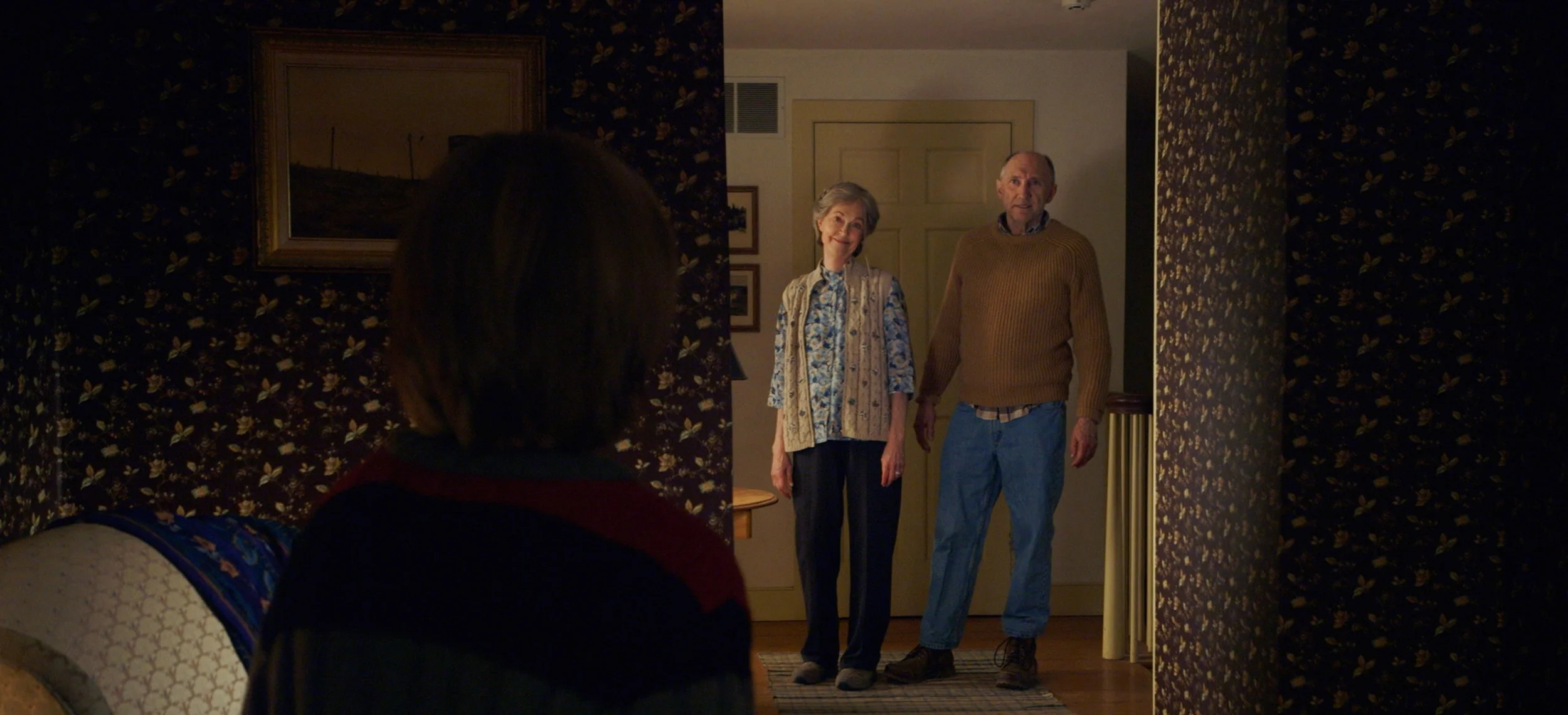
The grandparents are John and Doris Jamison, (Peter McRobbie and Deanna Dunagan), and at first, they come off as a caring and simple old couple looking to start a relationship with their grandchildren. They greet the kids at the train station and head out to their old farmhouse all set for a week of bonding. A commanding feature of the film is that we see the tale unfold “found-footage” style. Becca, while only fifteen, has decided to shoot a documentary about the visit, hoping that the footage can provide some sort of healing “elixir” to her family situation.

Things start off well, however it is as early as the first night that the kids get their first dose of “old people” weirdness. Becca ventures out of her room past curfew seeking a late-night snack, and instead stumbles upon Doris who is pacing around beneath the staircase vomiting ferociously. Things get stranger the next day when Tyler explores a shed only to discover a massive pile of soiled diapers. When the kids tentatively ask about these occurrences John dismisses Doris’ episode citing the flu, and simply that “she’s an old woman”. Doris covers for John’s collection of diapers telling Tyler that he has “incontinence” and is embarrassed about it.

Shyamalan does well playing with the audiences feelings about old people. In general we understand how they can sometimes be sickly, or in some way a little strange albeit very warm and caring. The oddities of the story are believable enough within an old person stereotype right up until Shyamalan lays down his “twist” and all the eerie episodes makes sense. Shyamalan utilizes the “first-person” view to increase suspense, and make the scenes feel more enclosed and claustrophobic. While “The Visit” is a vast improvement compared to Shyamalan’s notorious streak of bombs including “The Happening”, “The Last Airbender” and “After Earth”, it still isn’t in the same ballpark as his earliest films due to the duo of ghastly teenagers played by DeJonge and Oxenbould and a weak supporting narrative.

Becca comes off as a hormonal dilettante and Tyler as a wannabe version of Soulja Boy, although he fancies himself more in the realm of Tyler the Creator. The fact that Becca finds it appropriate to make a documentary about first meeting her grandparents is ridiculous, and she extinguishes any likeability she has by saying things like “don’t touch it, let it swing naturally” when recording a shot of a swing. Tyler is equally unpalatable with his self-proclaimed rapper name “T-Diamond Stylus” and nauseating rhymes.

Behind the sturdy horror plot, Shyamalan inserts a “coming-of-age”/redemption element that never really secures footing. Somehow Becca and Tyler must face their demons regarding their absentee father and throughout the horrific unfolding of events in “The Visit”, they both find themselves. This ramshackle backstory is clichéd and ultimately an excuse for a sickening final act.

There are flashes of the genius that directed “The Sixth Sense” and “Signs” in several scenes throughout “The Visit”. These moments of true suspense and surprise are encouraging indications that Shyamalan may be returning to form. However, “The Visit” was equally as annoying as it was enthralling, and only noteworthy because of its director’s recent flops. 

"No Escape" Review

OP-ROB RATING: BENCH

The new thriller, “No Escape” opens with a bloody political assassination, perpetrated by rebels in red bandanas. Forget any explanation for this startling tip-off to the movie, because the director, John Erick Dowdle, winds back the clock a few hours and puts us on a plane with Jack and Annie Dwyer (Owen Wilson and Lake Bell) and their two daughters, Beeze and Lucy (Sterling Jergins and Claire Geare). This happy family of four is headed to Southeast Asia, where Jack has been hired as a water valve engineer by a water company called Cardiff. On the flight, Beeze drops her beloved stuffed animal below her seat where it is picked up and returned by Hammond, a mysterious guy with a tiger tooth necklace played by Pierce Brosnan. Upon arriving to the airport, Hammond helps the Dwyers’ navigate through the masses of Southeast Asians and even shares a bumpy bus ride with them to the Imperial Lotus Hotel, where they all happen to be staying.

Despite excellent reviews on Trip Advisor, the Imperial Lotus Hotel turns out to be not so imperial in its accommodations. Nothing in the room works, the concierge is utterly unhelpful, and Jack can’t get his hands on a U.S. newspaper that isn’t three days old. Perhaps he should have done a smidge of research before uprooting his family and moving to a country in Southeast Asia that is festering with poverty and clearly has an unstable government. However, we are not left any time to think about how absurd Jack’s situation is. Just as he begins to dig into his stale USA Today, hordes of feverishly mad Asians in red bandanas swarm the streets and he must escape back to the crummy hotel.

Jack pilots himself back to the Lotus as if he was a local and makes it just in time to get his family to the roof of the building. From this point the movie simply goes into one narrow and improbable escape after another. This formula is not uncommon, and has been used in gripping films such as Gareth Evans’ “The Raid: Redemption” and Alfonso Cuarón’s “Gravity”. In “The Raid”, Evans fills the space between his close calls with bone-crunching fist fights, Cuarón opts for insightful character development. In “No Escape” the filling is far less inventive. Jack tosses his daughters off of a roof and bludgeons a man to death with little contemplation, yet when there is a lull in the action he has an untimely panic attack in a far less intense situation. When the odds of survival are low enough, Dowdle employs Hammond, who pops into the movie at various moments just in time to shoot all of the bad guys. Between these less than thrilling sequences we are given motivational pep talks on family survival from Jack and Annie.

Hammond serves up the most pathetic piece of “No Escape”, when he reveals the reason for the government overthrow. Cardiff, the water company that hired Jack, is run by heartless capitalists who have been exploiting the ambiguous country of its labor and resources for years. Hammond explains how Cardiff moves into the region promising clean water facilities, and lures the common people into crippling debt in order to pay for the water. Now that Dowdle has proved his sentiment for poor Southeast Asians, he gets back to the poor Southeast Asians mercilessly trying to kill the rich white people.

True to its title, “No Escape” offers no escapism. The film seems to be running on fumes from the opening scenes. Owen Wilson and Lake Bell are admirable victims, yet there is nothing resembling an interesting plot to support them. It is hard to feel suspense when the basis of the situation is half-baked and Pierce Brosnan is always on deck to neutralize the threat. Owen Wilson and Lake Bell should know a late-summer dud when they see one, after an experience abroad like “No Escape”, they might do their research next time.


"The Man from U.N.C.L.E." Review

OP-ROB RATING: ALL-STAR

“The Man from U.N.C.L.E.” is the type of movie you go into expecting nothing. Guy Ritchie hasn’t directed anything in the past decade that has lived up to the distinctiveness of his first two hit films, “Lock, Stock and Two Smoking Barrels” and “Snatch”. The film’s two stars, Henry Cavill and Armie Hammer, aren’t exactly known for their exceptional acting but rather for their good looks. We’re talking about the star of “Man of Steel” and “The Lone Ranger” here, to put things in perspective. Rounding out the low expectations is the fact that this movie is based off of a TV series from the 1960s under the same name. However, Ritchie knows his cards and doesn’t try to bluff. He knows that he is dealing Henry Cavill and Armie Hammer, not theater experts like Michael Fassbender and Benedict Cumberbatch. Recognizing the capacity of his leads, Ritchie injects his subject material with lively screenplay and whole lot of style. The result is a surprising revival of a well beloved series.

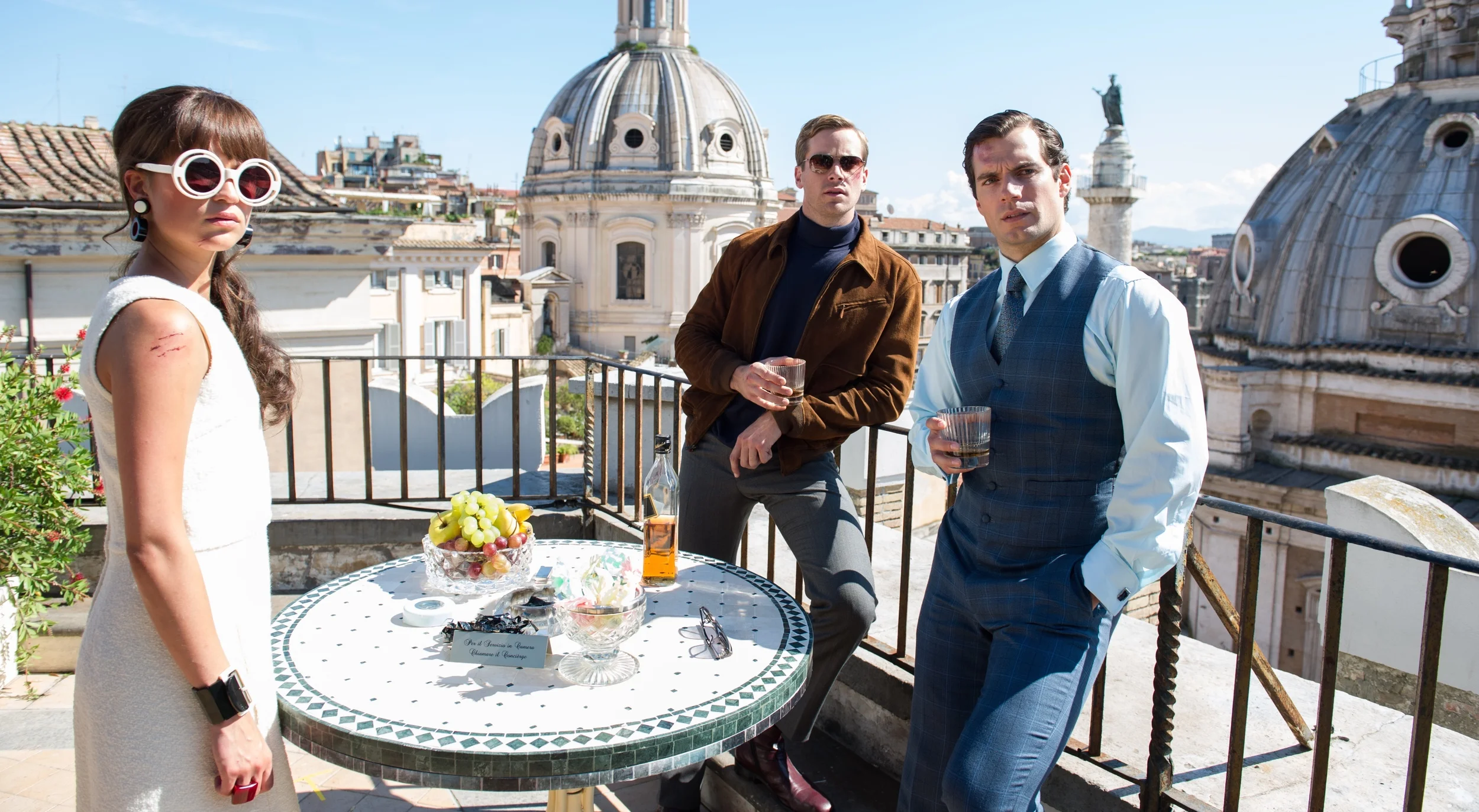
The film opens with Roberta Flack’s “Compared to What” paired with a sparky montage of Cold War headlines and news reels and then immediately sends the audience to 1963, in the divided city of Berlin, Germany. Napoleon Solo (Henry Cavill), is an American agent tasked with extracting a woman named Gaby Teller (Alicia Vikander) from the communist side of the wall. Solo, an ex-army officer turned professional thief is the Americans top secret agent, serving his government in the field in order to avoid doing time in prison. Illya Kuryakin (Armie Hammer) is a freak athlete with a chip on his shoulder, and the Russians’ top secret agent. He is waiting for Solo on the other side of the wall with the sole mission of stopping him. Little do these two rivals know they will be forced into partnership by their governments in a joint U.S.-Soviet joint mission to save the world from a nuclear attack.

The aforementioned woman Gaby Teller, happens to have a father by the name of Dr. Udo Teller (Christian Berkel) who is a nuclear scientist with the ability to develop nuclear bombs with drastic simplicity. His knowledge could be utilized by any country or criminal organization in order to create a nuclear bomb. To the superpowers’ great dismay, Dr. Teller has gone missing, and is suspected to have been abducted by a radical faction. Ironically, Dr. Teller’s disappearance has forced the Americans and the Soviets to pool their resources in order to keep nuclear power amongst themselves. In order to find the doctor, Solo and Kuryakin are tasked with going undercover with Ms. Teller in order to link up with her estranged Uncle Rudi (Sylvester Groth) who may know his whereabouts.

Like many spy films, there are plenty of twists and turns throughout the story. What separates “U.N.C.L.E.” from any other movie of its category is how Ritchie incorporates snappy dialogue and an energizing attention to detail. One of the most appealing aspects of “The Man from U.N.C.L.E.” is Ritchie’s use of humor. There is a competitiveness between Solo and Kuryakin that provides several laughs, each trying to prove his country better with their respective nifty gadgets and nuanced fighting techniques. The levity in the dialogue prevents “U.N.C.L.E.” from taking itself too seriously. However, Ritchie also flashes a dark side at several points during the film. In one scene a torture specialist describes his disturbing childhood and delight in working in demented laborites for the Nazis during World War II. There is a nice balance to the film that keeps it light, but packs a punch when needed.

One of my favorite scenes came near the end of the film when Solo and Kuryakin are involved in the raid of a compound. Instead of wasting ten minutes documenting each and every stage of the raid, Ritchie compacts it into a one-minute sequence. Using sliding split screens to quickly flash through each stage, Ritchie saves time and creatively cuts through what would have been a long and boring scene.

At the beginning of his career, Guy Ritchie achieved validation by masterfully capturing the grittiness, absurdity, and humor of the underground criminal world of urban England. It has been a long time since Ritchie’s first two films, and he has since picked up a taste for finer things. While “The Man from U.N.C.L.E.” doesn’t have the brains of a Le Carre novel or the gravitas of a 007 flick, it is refreshing and fashionable spy thriller that breaks the mold in its competitive genre.

"Straight Outta Compton" Review

OP-ROB RATING: STARTER

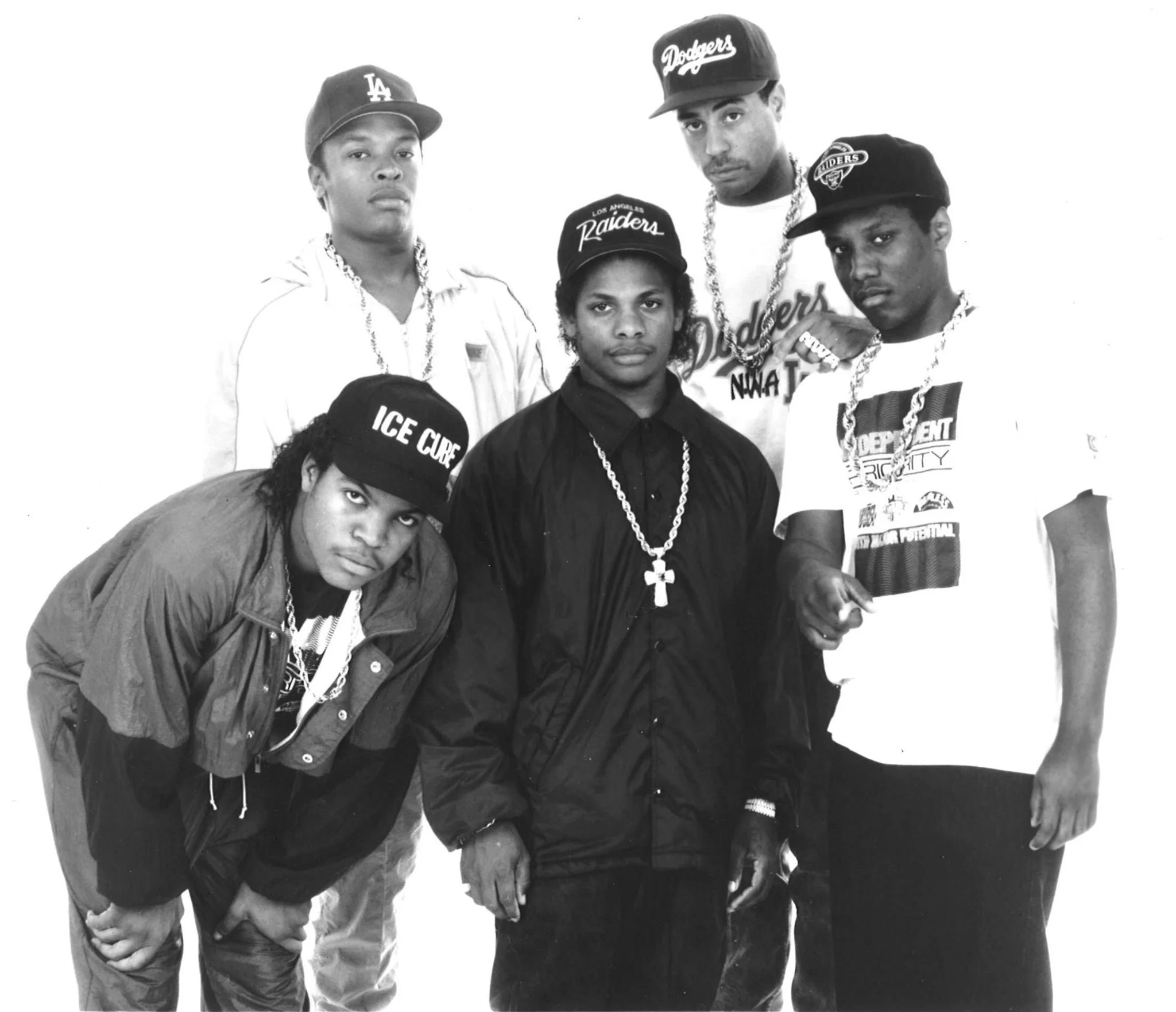
“Straight Outta Compton” is a biopic directed by F. Gary Gray about the infamous rap group, N.W.A. Gray’s first priority in “Straight Outta Compton” is introducing each member of the group. Eazy-E (Jason Mitchell) is presented in a high-octane scene staged in a crack den. Ice Cube (O’Shea Jackson Jr.) makes his first appearance in a prolonged and equally intense scene on a school bus where he is jotting lyrics in a notebook looking at what is going on all around him. Fittingly, we first meet Dr. Dre (Cory Hawkins) lying on his bedroom floor, jamming out to records with some headphones on. MC Ren (Aldis Hodge) and DJ Yella (Neil Brown Jr.) both appear in club scenes non-central to their own characters.


As we follow the group’s rise to fame and subsequent implosion, we get to see how the album “Straight Outta Compton” came into being with several scenes in the studio. We get a glimpse of the group’s hectic life on tour involving run ins with the police as well as hotel room shenanigans with topless women and plenty of guns. Another major component is the presence of Jerry Heller (Paul Giamatti), the group’s controversial manager. As a result of contract disputes and weak friendships, N.W.A. crumbles and the film breaks into three different storylines. One is that of Ice Cube and his solo career. Next is that of Eazy-E and his relationship with Heller and ultimately his life-ending battle with AIDS. Lastly is the story of Dr. Dre and his relationship with Suge Knight (R. Marcos Taylor) and Death Row Records. MC Ren and DJ Yella simply fade into the background.


“Straight Outta Compton” is entertaining, well acted and interesting enough to land on as a random movie while flipping channels. But a greater meaning is missed, and vital questions left unanswered. Gray chooses to take many different paths, and by doing so, commits to none of them. The story of N.W.A. can’t fit into two-and-a-half-hours; there are simply too many important characters. Gray explores two of them with extreme brevity, and gives the audience just a taste of what happened to the three more prominent members. In all reality, this topic should have been documented in a miniseries if the goal of giving each character his due was to be fulfilled.


Some of the most important events were left half-baked. Ice Cube releases two solo albums in what seems like five minutes, while Suge Knight bursts onto the scene as an unknown to the audience. In an instant Eazy-E loses what seems to be all of his money, and his trust with Jerry Heller is shattered over reasons that are barely referenced and never fully explained. I still don't know what the hell-er happened!


Gray is at his best in the opening scene introducing Eric “Eazy-E” Wright rolling into a crack den to collect on some unpaid debts. At this point Eric is a drug dealer, and this is simply part of the job. The location of this scene is Compton, an area in Los Angeles known for its poverty and crime. For the viewer, this house is a nightmare; a dilapidated shack filled with sweaty drug addicts, graffiti and empty 40s. For Eric, this apartment is commonplace; it is part of his reality. In many ways this particular scene feels bigger than itself. There is an atmosphere of desperation and frustration in the house, and more broadly in the streets of Compton. Gray manages to establish Eazy-E as a character, while showing us the overall surrounding.


A prominent element in the film is the tumult in and around Los Angeles during the time period. There a several scenes depicting police brutality, unfair arrests and mounting tensions. Gray also chooses to show footage of the Rodney King beating and the subsequent trial and riots that followed. N.W.A. was the voice of one side of these events, yet the narrative never explores the bigger picture.


In this iconic photo from the riots in Ferguson, Missouri you can clearly see a group of police officers taking aim at a black man with his arms up. Also in the photo is a subtle, yet powerful indication of the influence of N.W.A., the lyrics "Fuck tha Police" spray-painted onto a mailbox in the background. No matter where you stand on race issues, no matter your political beliefs, one thing is undeniable: N.W.A. struck a note of frustration that is still prevalent today. Their lyrics are a testament to their "reality” and they still echo. It is unfortunate that "Straight Outta Compton" settles for amusing yet unfulfilled storylines instead of tapping into the soul of the same nightmarish realities that haunt America today.

"Trainwreck" Review

OP-ROB RATING: ALL-STAR

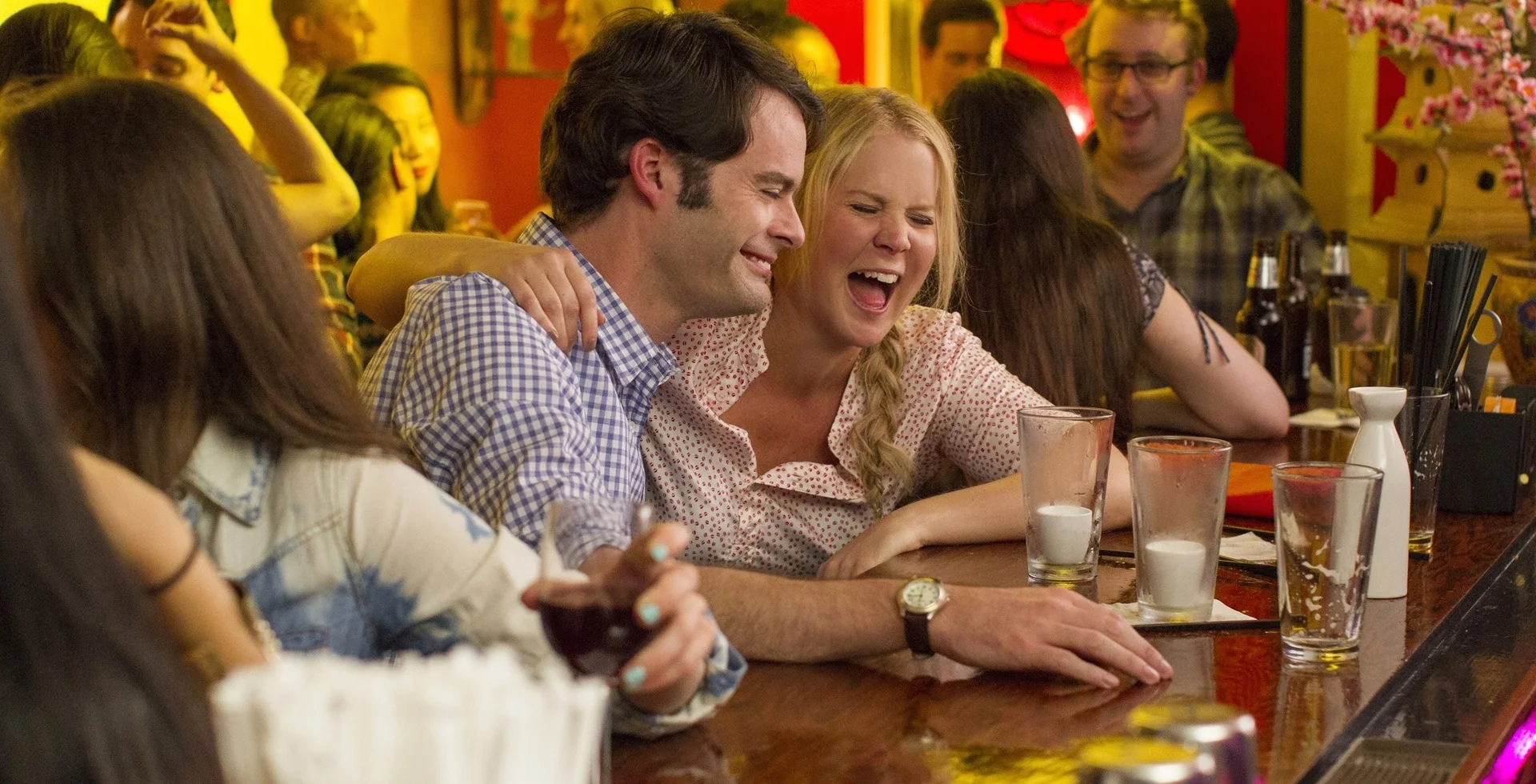
           “Trainwreck”, the latest film from Judd Apatow, is the story of a woman who believes that monogamy isn’t realistic. This woman is Amy Townsend (Amy Schumer), she works as a writer for “s’nuff”, a trashy men’s magazine located in NYC; and what seems to be most nights she parties at bars and clubs, usually ending up in a random man’s bed. But don’t be fooled into thinking that Amy is being taken advantage of, because she is completely in control of her lifestyle. Her routine is this: get manageably drunk at the bar, go home with the sexiest guy, have whatever kind of sex feels right that night, and never ever sleep over once it’s done. For Amy, this works perfectly. She never has to call the guy again and she always gets exactly what she wants. All this seems to be very satisfying for Amy, that is until she meets Aaron Conners (Bill Hader), a sports medicine doctor, and her entire belief system is turned on its head.


            “Trainwreck” is the first movie directed by Judd Apatow starring a female lead in Amy Schumer. Amy Schumer also wrote the screenplay, her first ever for a movie. For all those irregularities, “Trainwreck” doesn’t feel all that different from Apatow’s earlier films, “Knocked Up”, and “The 40-Year-Old Virgin”. Though it doesn’t break new barriers or rewrite the rules of comedy, the film is laugh-out-loud funny, incredibly vulgar, and in the end, very tender and thought provoking.


            Amy Schumer takes on the all-important job towing the line between being funny and disgusting. “Trainwreck” is filled with everything from dirty tampon jokes to a scene where Schumer’s character describes fishing a marooned condom out of her vagina to a group of stunned housewives. Some of the more inappropriate scenes are a little uncomfortable to watch, but like all good comedies the punch line is frequently worth the pain. Bill Hader also delivers a great performance as the innocent and sincere sports medicine doctor. While I don’t completely understand his desire for the “trainwreck” of a human being that Schumer portrays, his body language and thoughtful dialogue in the film make it very convincing.


            For the most part, Apatow focuses on developing the characters of Amy Townsend and Aaron Conners, however there are a slew of noteworthy supporting characters. Brie Larson plays Amy Townsend’s sister who has chosen a more responsible lifestyle by getting married and having a child. The scenes between the two sisters often feature tension and provide opportunities for Amy to mature and strive for resolution. An equally compelling foil is the Townsend’s father, Gordon (Colin Quinn). The opening scene of the film is actually dedicated to Mr. Townsend telling his children about why he and their mother are getting a divorce, ultimately leading to him explaining that monogamy isn’t realistic. The dynamic between Mr. Townsend and Amy is one if the most interesting parts of the movie. At s’nuff magazine, Tilda Swinton plays Amy’s eccentric boss who represents the corrosive personality that the early version of Amy is on the road to becoming.


            Of all the best parts of “Trainwreck” one particular role stands out from the rest, this is LeBron James. In the film, LeBron plays a close friend of Dr. Conners and is featured in significant portion of the film. LeBron looks right at home on screen, and his scenes were by far the most enjoyable. In one hysterical scene LeBron and Dr. Conners discuss the difference between Cleveland and Miami, LeBron wryly states, “There is no difference.” While LeBron still has a quite a few years to play basketball, his performance in “Trainwreck” should afford him the opportunity to “take his talents” to the silver screen as a second career.


            Despite the overall quality of the film, there are many scenes that seem unnecessary, and sometimes too obscene to have any positive effect. One particularly unfunny scene occurs when Amy goes home with a sixteen-year-old intern from her office. They have a strange sexual encounter that is gross, weird, and worst of all just not clever in any way. There are also many lewd quips delivered by Schumer that feel forced, and are often not at all amusing. Finding a balance in a raunchy comedy like “Trainwreck” must be incredibly challenging, however striking that perfect chord is vitally important to making an all-time-great. “Trainwreck” doesn’t quite make the leap, though it will find its place as an often revisited, hugely entertaining comedy that often has a sweeter side than the initial behavior of its main character might suggest.


"Amy" Review

OP-ROB RATING: LEGEND

             “Amy” is a documentary directed by Asif Kapadia, the same man behind the award winning film "Senna". The documentary masterfully unfolds the heart-wrenching story of the late singer, Amy Winehouse, and does so with great reverence toward the artist, and more importantly the person.


            Much of the documentary is focused on the music of Amy Winehouse. The lyrics to her songs are displayed on the screen in subtitles of her own handwriting. Kapadia makes sure the audience realizes just how reflective Amy’s music was of what was going on in her life. Listening to one of her songs is akin to delving into the private diary of a troubled girl. We see her life story through home movies and the lens of the paparazzi; her music provides the narrative.


            What I found most moving about Amy Winehouse was her unconditional love. Love for a husband that introduced her to toxic addictions, squandered her money and left her repeatedly for another girl. Love for a father that, at the very least, was too busy enjoying and insuring Amy’s financial success, to care for her physical and emotional wellbeing. Love for a series of managers and promoters that would go so far as to put her on stage wasted rather than cancel a show.


When I initially saw the trailer for “Amy” I had my doubts. I thought to myself, “Well its great that she had this sweet side, but what about the partying and the bawdy image she made for herself? Isn’t that her fault?” After seeing “Amy” I can say that the self-destructive behaviors and bad-girl brand may have simply been byproducts of the people around her. Perhaps none of those things were done out of selfishness, publicity or personal pleasure. As Kapadia would have us believe, Amy Winehouse sought only to love those around her and it was her unrelenting investment in those she loved that ultimately killed her. He illustrates a very convincing argument.


 The start to Amy’s downward spiral came when her true friends left her side. These friends included her former manager Nick Shymansky and two of her childhood girlfriends, Juliette Ashby and Lauren Gilbert. Throughout the entire film it is clear that these three individuals were the only people that loved Amy with no strings attached. Why she distanced herself from these people is a question that the audience is left to explore. Perhaps Amy Winehouse's greatest flaw was her inability to identify the people who were truly good for her until it was too late.


One important revelation I gained from the film was just how emotional Amy Winehouse was as an artist. The words in her songs were written in blood, and I can only imagine how painful it was for her to perform them sometimes. One of the more tender scenes in the documentary comes when Amy starts recording with one of her music idols, Tony Bennett. In this scene Amy is nervous, sober, and at her very best as a singer. She botches the first take on a duet with Bennett, but after the living legend offers some gentle words of encouragement, she rises above and beyond the occasion.  Although “Rehab” was the song that put Amy Winehouse on every front page in America, she was a jazz singer at heart. The music of Amy Winehouse wasn’t meant for massive crowds or wild music festivals, but instead for small venues where people could quietly listen and experience the clarity of emotion that beamed through her music. The scene with Bennett affirms her rightful place in jazz music, as Bennett himself later said, "the great ones that are very talented know just how to turn jazz singing into a performance that's unforgettable. And Amy had that gift."


 In one of the final scenes Amy is booed off the stage at a show in Belgrade; a show she was forced into by her management. In the all of the disappointment and calamity in the crowd, there is also a sense of spectacle. As if the sight of Amy stumbling around in sheer drunkenness were entertaining. For many people, this will be the Amy Winehouse that is remembered, a considerable talent that succumbed to substance abuse and pursuit of celebrity in the public eye. That is why I am glad that Asif Kapadia was able to provide a different view of Amy Winehouse in “Amy”. Instead of looking at the glitz, lunacy, and horror of Amy’s short stint at the top of the music world, he focuses on her time before the spotlight. When supportive and loving friends surrounded her, a time when she played her music for small crowds who were awed by her performances.


For those who decide to see “Amy”, a new person with a familiar face will emerge to be remembered . A woman so brilliant at singing that she ranks among the most gifted to ever pick up a microphone; a kind, yet haunted soul who gave her all for those she loved. 

"True Detective" Season 2 Episode 1 Review

OP-ROB RATING: STARTER

An avid “True Detective” fan told me that while he was excited for the new season, Matthew McConaughey and Woody Harrelson just couldn’t be beat; Detective Rust Cohle and Marty Hart were simply too perfect, and even the most impressive cast and new story wouldn’t match the previous season. Season 2 premiered last night, and it confirms what my friend pointed out and what many would agree with: “True Detective” will not be the same.


            Episode One, “The Western Book of the Dead”, takes place in several cities in Los Angeles County, California; most prominently “Vinci” City and focuses on four different main characters. Frank Semyon (Vince Vaughn) is a real estate entrepreneur and a white-collar criminal, although we have reason to believe he has had a more hands-on, violent past. Ray Velcoro (Colin Farrell) is a police detective within Vinci City. As apparent from episode one, Velcoro was once an honest lawman but has sunken into depression, alcoholism, drug abuse and corruption after a family tragedy. Detective Ani Bezzerides (Rachel McAdams) is a similarly dark character. She isn’t corrupt, but may be an alcoholic and most certainly has family issues that contribute to her lone wolf, detached attitude. Finally, Officer Paul Woodrugh (Taylor Kitsch) is the cleanest of the bunch. He is dedicated to a fault, yet is clearly troubled by his past. His bodily scars and ex-military history are good places to look for his current post-traumatic symptoms within the show.


            These dark characters are all drawn together through the disappearance and murder of the Vinci City Manager, Ben Caspar. This particular character is not actually shown on screen with a pulse, however we can put together that he is involved with Mr. Semyon in orchestrating a sketchy, California railway deal. His disappearance causes issues for Semyon, who must convince investors of the proposition’s adherence with the state government.  Velcoro is assigned to investigate Caspar's disappearance by his commanding officer. When Velcoro searches Caspar’s house he finds a disheveled residence filled with pornographic artwork, sex toys, and a very creepy, Aleister Crowley inspired costume. Caspar’s body turns up on the side of the highway propped up on a park bench. The man to stumble upon him is none other than Paul Woodrugh, who pulls off onto the side of the road during an intense motorcycle ride in the pitch black of the night. He reports the corpse to the police; the episode ends with Velcoro and Bezzerides at the scene of the discovery.


            The episode is filled with a lot of character development. Much of which is dark and depressing. The plot moves fast and the viewer is challenged to catch every little shard of information that comes flying across the screen. The characters all seem to struggle with deep-rooted, emotional issues that will define the tone of the show.


            The creator and writer of “True Detective”, Nic Pizzolatto, knew what my friend knew. Any follow up to McConaughey and Harrelson would be a disappointment. Pizzolatto himself grew up in and around New Orleans; the first season of “True Detective” was so natural and automatic that any kind of extension would seem artificial and forced. For that very reason, Pizzolatto has decided to take the show on a veritably different path. The first episode features a similar opening to the old season, as well as the familiar panning landscape shots, except now the camera peers over Southern California instead of the Louisiana bayou. This new setting in California provides a fresh canvas, and the new characters are different colors for him to paint. I don’t know how the rest of the season will turn out. But after one episode I can say for sure that Pizzolatto’s writing is just as dark as before, the acting is just as good and the plot is far more cerebral. In all, “True Detective” is back and it’s a whole new ordeal. I can’t wait for the story to unfold.