OP-ROB

Film and Television Reviews

  • Updates
  • Reviews
  • Rating System
  • About
  • Op-Rob Top 50

"The Big Sick" Review

August 01, 2017 by Robert Doughty

OP-ROB RATING: ALL-STAR

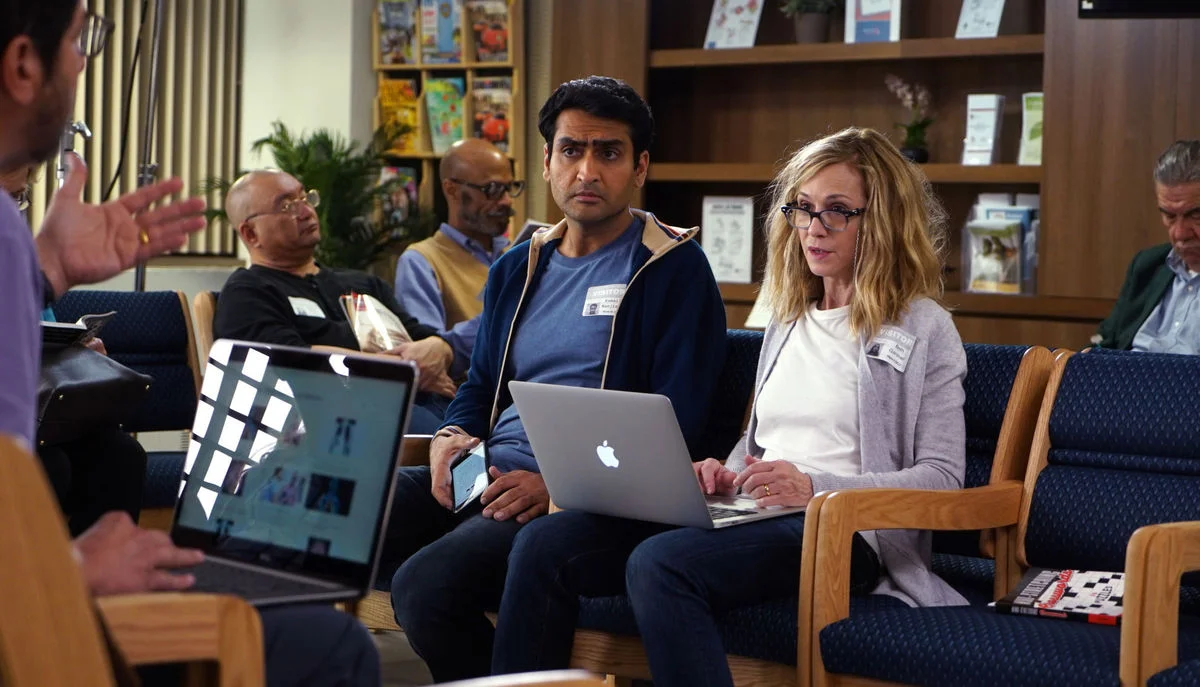
“The Big Sick” is a romantic-comedy set in Chicago about a stand-up comedian named Kumail (Kumail Nanjiani) who falls in love with an aspiring psychiatrist named Emily (Zoe Kazan).  Kumail comes from a  Pakastani Muslim family that fervently clings to certain traditions such as daily prayer and arranged marriage.  Emily is the daughter of an odd couple comprised of a coarse East Carolina woman named Beth (Holly Hunter) and a deadpan Brooklyn native named Terry (Ray Romano).  The movie starts off like any other rom-com with a zippy introduction that brings Kumail and Emily together as boyfriend and girlfriend.  However, the relationship is fractured when Emily discovers that Kumail cannot commit to her because of his family’s insistence that he marry a Pakastani woman.  They break up, and almost immediately afterwards Emily falls extremely ill and winds up at the hospital. 

For one reason or another, Kumail is the first person to arrive at the hospital where the doctors tell him that Emily needs to be put into a medically induced coma for the safety of her vital organs.  Soon after, Beth and Terry arrive at the hospital where they begrudgingly interact with Kumail.  Beth is especially caustic toward her daughter’s ex-boyfriend.  However, Kumail refuses to abandon the situation and spends the next several days visiting the hospital right alongside Beth and Terry.  “The Big Sick” focuses mainly on their developing relationship.

Purely as a rom-com, “The Big Sick” isn’t noteworthy.  First, the “romance” between Kumail and Emily barely gets going before they break up and she gets sick.  Although I won’t reveal what happens to Emily, the denouement is skimpy on grand gestures.  On the comedy side, there is an absence of laugh-out-loud moments in the film, which seems criminal regarding Kumail’s profession as a stand-up comedian.  Adding intrigue to “The Big Sick’s” lackluster performance as a rom-com is the fact that it was produced by Judd Apatow. Over his career Apatow has directed and/or produced titles such as “The 40-Year-Old Virgin”, “Knocked Up”, “Forgetting Sarah Marshall” and “Trainwreck” just to name a few.  If anyone knows how to crank out a hilarious, yet subtly touching rom-com it would be Apatow.

It would seem that failing to impress its genre would doom “The Big Sick”.  Yet, it doesn’t. Where “The Big Sick” transcends its tepid rom-com roots is through a finely tuned cast and an authentic approach to age-old, universal conflicts.  While Kumail Nanjiani and Zoe Kazan are both charming in their respective roles, the real stars of the film are the parents.  Holly Hunter and Ray Romano bring a startling intensity to the movie from their very first scene.  As we discover later on, Beth and Terry have relationship struggles of their own, and looking back on the film you can detect that tension before we get to know them as characters.  Although slightly less utilized, Anupam Kher and Zenobia Shroff are equally as effective portraying Kumail’s parents.  There are a number of masterfully awkward, squirm-worthy scenes in which Mrs. Nanjiani invites eager young Pakistani women into family dinners to meet Kumail.  “Look who just decided dropped in,” she’ll say when escorting the beautiful young women to a seat next to the unenthusiastic Kumail at the dinner table.

With such focused performances, “The Big Sick” delivers a number poignant moments between characters that cut right to the heart of complex arguments.  For example, in one scene Kumail and his parents have a quarrel about his detestation of arranged marriage.  When Kumail takes his stand, his parents respond by making the point that they forfeited a comfortable life in Pakistan to move to the United States.  Furthermore, they allowed their son to pursue his dream as a stand-up comedian rather than pursuing a steadier career.  With so much sacrifice the least Kumail could do would be to marry a Pakistani girl, right?  In this scene you feel the weight behind each argument, and it pulls you apart.  This scene is just one of many that have a paralyzing effect the viewer because of their honesty and passion. 

Ultimately, I didn’t walk out of “The Big Sick” feeling uplifted or heart warmed.  Rather, I felt shaken by the authenticity of many individual scenes. Even though I have next to nothing in common with any of the characters, I resonated with their problems in pieces of my own life.  As is revealed in the credits, “The Big Sick” is based on Kumail Namjiani’s real-life story.  Perhaps such an impressive level of clarity on such intricate struggles requires fact-based inspiration.
August 01, 2017 /Robert Doughty
Comment

"Dunkirk" Review

July 21, 2017 by Robert Doughty

OP-ROB RATING: STARTER

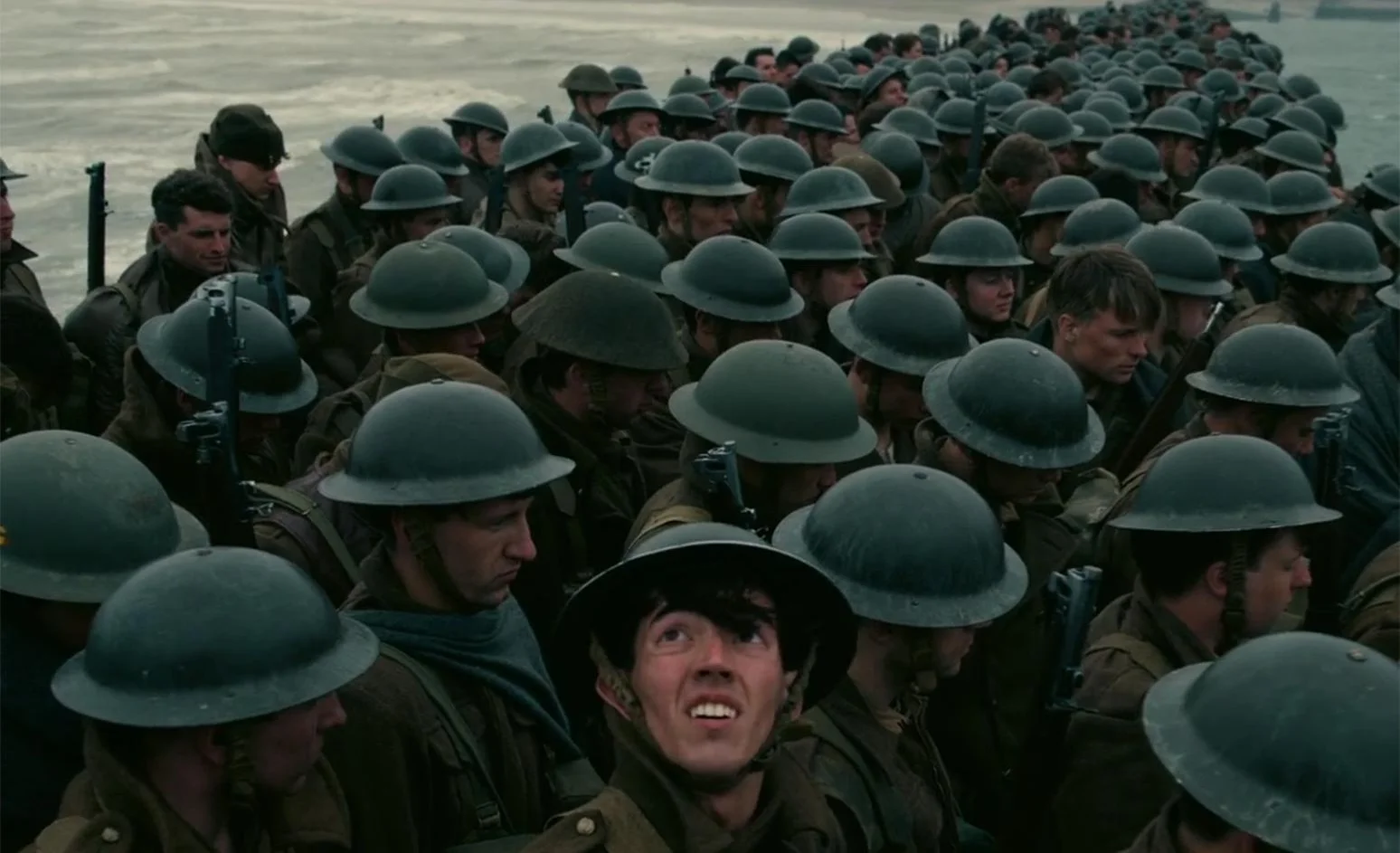
“Dunkirk” is a 2017 war film directed by Christopher Nolan about the evacuation of Dunkirk during World War II, between May 26th and June 4th, 1940.  The evacuation involved hundreds of thousands of British and French soldiers who were cornered by the German army.  While the evacuation was the result of a horrendous military defeat, the Allies' survival is celebrated as a miracle rescue in the face of certain death.  A failed evacuation could have resulted in a German invasion of Britain, and an Axis victory in the war.

The film stars an ensemble cast including Mark Rylance, Tom Hardy, Kenneth Branagh, Fionn Whitehead, Jack Lowden, Cillian Murphy, and Harry Styles among others.  To describe each character would be tedious and unhelpful, as the general structure of the film has almost nothing to do with their personal identities.  With the characters as placeholders, “Dunkirk” is organized into three plot lines that occur in separate spans of time, each depicting a different backdrop of the evacuation.  At one point during the film all them overlap.  This is signature Nolan, who has played with time structures in several of his films including “Memento” and “Inception”.  The first plot line is titled “The Mole”, and lasts for one-week detailing activities on the beach at Dunkirk and the mad scramble of soldiers desperately trying to hitch a boat ride back to England.  The second plot line, “The Sea” takes place in one day, and portrays British locals who are tasked with taking a day-boat across the channel to help rescue soldiers.  The final, and most briefly framed segment is “The Air”, and stars Tom Hardy as a daring Spitfire pilot whose story takes place in one hour.  Despite the disparities of the time frames, each “chapter” is given roughly the same amount of screen time. 

As far as construction, “Dunkirk” reminds me a lot of Alfonso Cuarón’s 2013 film, “Gravity”.  Both are a series of thrilling near-death experiences from which characters must narrowly escape.  This, along with an extremely loud score by Hans Zimmer, provide consistent tension to the movie.  Furthermore, the constant noise and action lend precious little time for talking amongst characters.  As Nolan explained in an interview with Premiere, “I did not want to go through the dialogue, to tell the story of my characters…The only question I was interested in was: Will they get out of it? Will they be killed by the next bomb while trying to join the mole? Or will they be crushed by a boat while crossing?”

The Nolan effect works best with films that have muddled plots.  Take “The Dark Knight Rises” as the premiere example.  It is a stirring, visually spectacular film, but its plot has more holes than the Brooklyn Net’s roster and the narrative is absurd when you map it out scene by scene.  Such is the case with all super-hero films. Men and women in full costume fighting crime is comical when applied to the real world. Yet with his “Dark Knight” films Nolan was able to distract the audience enough to make his corner of the super-hero genre look and sound serious.  It is an incredible skill and it is also Nolan’s biggest weakness as a director. Unlike the “Dark Knight Trilogy”, “Dunkirk” is based on a true story.  The Nolan distraction is grand and inspiring, but lacks context and continuity.  I didn’t learn much of anything about Dunkirk while watching “Dunkirk”.

When all of the visual grandeur and ear-blasting sound is stripped away, there are precious few moments worth remembering from the film.  One of them occurs near the end, in which a boatload of soldiers arrive home in England.  The downtrodden men shuffle toward a train where volunteers hand out tea and biscuits.  An elderly man with his head down hands out blankets telling the men, “well done” as he distributes them.  Styles’ character receives his blanket and, out of shame, tells the old man “we just survived”. The old man responds, “that is enough” and continues passing out blankets and telling the defeated soldiers, “well done”.  In the end, this scene is the most poignant in all of “Dunkirk”.  It is a subtle message about patriotism, the value of survival, the wisdom of old men, and the importance of morale. 

The best war movies have moments with characters we feel we know as an audience.  Something changes in those characters, and that change reflects a greater truth about the nature of war.  “Dunkirk” is a finely crafted emotional squall, but it’s overall message is lost in the tumult.  Nolan is particularly skilled at sustaining a feeling of “epicness” throughout a scene.  No other director can really compare.  I walked out of the theater with tears in my eyes.  Yet, an hour later when thinking about the message of “Dunkirk”, I couldn’t point to a wire-to-wire narrative and say “Yes! This is what ‘Dunkirk’ is really about.”  Ultimately, I think it’s worth looking back at that quote from Nolan in his interview, because I think he succeeds in his mission.  In terms of a thrill-ride, “Dunkirk” is top of the line.  The sound, the visuals, the acting, the music…  it is all very high quality.  However, as a deeper exploration into the nature of war and a documentation of a major historical event, “Dunkirk” barely scratches the surface.

July 21, 2017 /Robert Doughty
2 Comments

"Tommy's Honour" Review

July 12, 2017 by Robert Doughty

OP-ROB RATING: BENCH

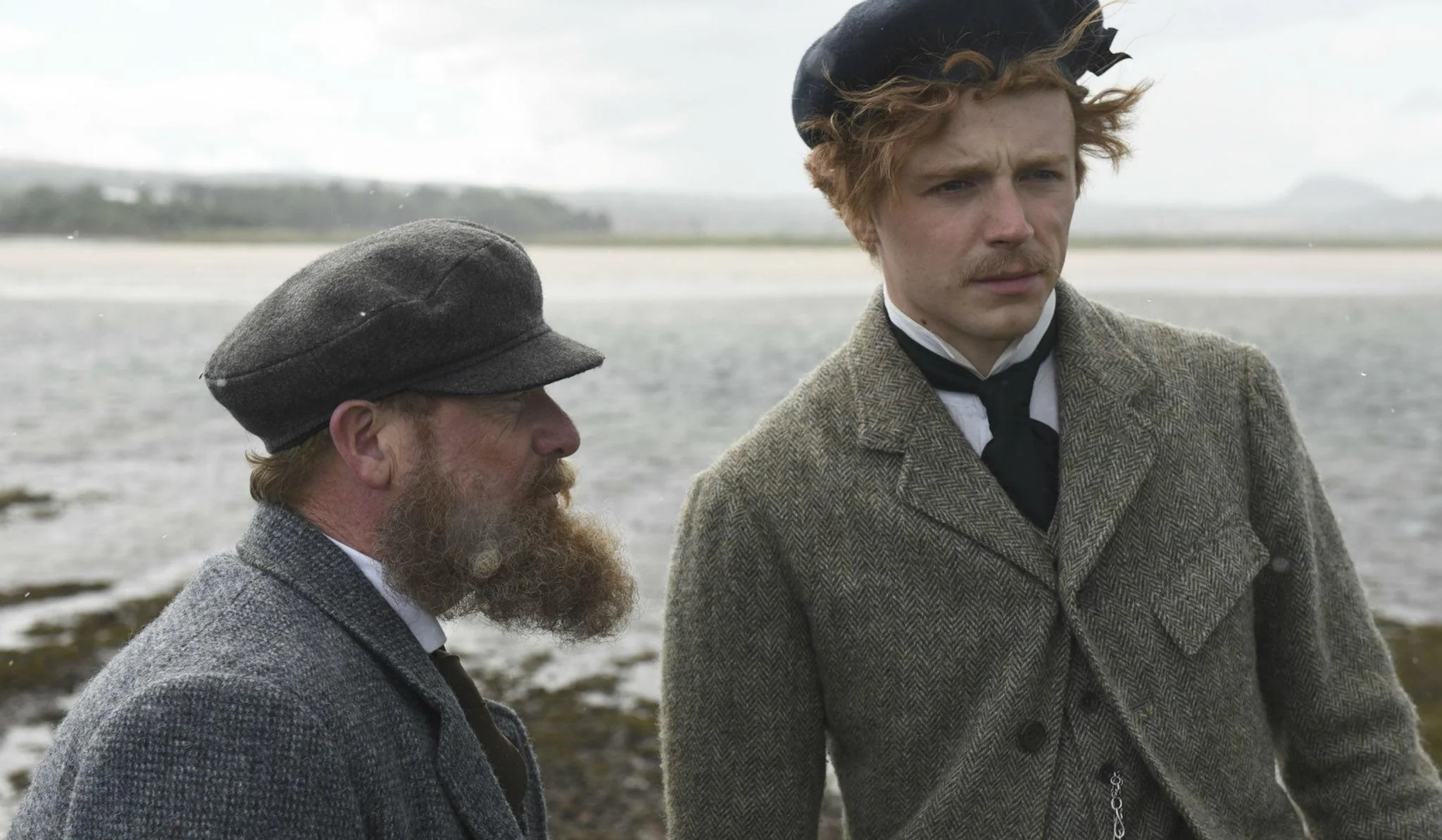
“Tommy’s Honour” is a 2016 Scottish film directed by Jason Connery.  The film is a historical drama about the father-son pair of Old Tom Morris and Young Tom Morris, portrayed by Peter Mullan and Jack Lowden, respectively.  Widely renowned as the grandfather of golf, Old Tom was the greenskeeper at St. Andrews golf links in Scotland for most of the 19th century and was instrumental in starting The Open Championship.  In fact, Old Tom Morris struck the first shot in the first ever Open in 1860.  Furthermore, Old Tom and his namesake were dominant golfers for their time.  A quick glance over the earliest winners of the Open Championship reveals the supremacy of the Morris clan.  Of the first eight Open Championships, Old Tom Morris won four with his final victory coming in 1867.  Subsequently Young Tom Morris took over, winning the next four consecutive Opens . “Tommy’s Honour” focuses on the period in which Young Tom took over as the preeminent golfer between the duo.

The game of golf played in “Tommy’s Honour” does not much resemble the modern variation.  The greens look more like the second cut of rough and the shoddily crafted balls are propped up on little piles of sand instead of wooden tees.  “Tommy’s Honour” depicts the game in its infancy.  A typical player in the film also doesn’t quite fit the modern mold.  With the exception of a few Scottish and English elites, the game is played by gruff, heavy-drinking, fighting men of the lower classes.  And the very best players, like Tom Morris the elder and younger, are plucked by the wealthy club members to compete in matches for the sake of big betting.  It is in this context of early golf that “Tommy’s Honour” works best as a film.  The stark backdrop of St. Andrews provides several scenes that are both beautiful, and serviceable to the golf action.  On a grander scale, “Tommy’s Honour” performs strongly as a period piece.  The film feels securely authentic with remarkable costumes and swaths of accent-heavy dialogue. For non-Scots, subtitles may be necessary.

However, despite the success of “Tommy’s Honour” in these distinct areas, the film flounders with a generic, often gimmicky plot and choppy momentum. Over the course of the film Young Tom “invents” backspin, grooved wedges, and the golf bag.  With each invention there is an eye-roll worthy presentation that bogs down the pace and smudges the historical accuracy of the film.  And while golf is certainly the focus of “Tommy’s Honour”, there are a few token subplots headlined by a romance between Young Tom and a woman named Margaret (Ophelia Lovibond) as well as a class-struggle theme involving the Captain of St. Andrews Golf Club, Alexander Boothby (Sam Neill).  Neither storyline proves too memorable, even though Margaret ends up having a key role in the ending of the film.

Perhaps the most identifiable flaw underpinning “Tommy’s Honour” is the slapdash cutting style from scene to scene.  The most blatant examples occur when the story transitions from a golf-action scene to a domestic one, and vice versa.  In one sequence we are thrown into the tail end of a random golf match in which Young Tom sinks a winning putt without any lead up or explanation. Near the end of the film one of the characters is portrayed as falling into alcoholism, which is depicted in scenes of him drinking in three different locations consecutively without any dialogue.  These transitions are disorientating and quite frankly bizarre.

Ultimately for those who love the history of golf, “Tommy’s Honour” could be an entertaining trip back in time.  However, for the average viewer the film falls short.  A film with so many solid pieces shouldn’t have the overall feel of a straight-to-DVD feature.

July 12, 2017 /Robert Doughty
Comment

"Hitchcock/Truffaut" Review

July 11, 2017 by Robert Doughty

OP-ROB RATING: ALL-STAR

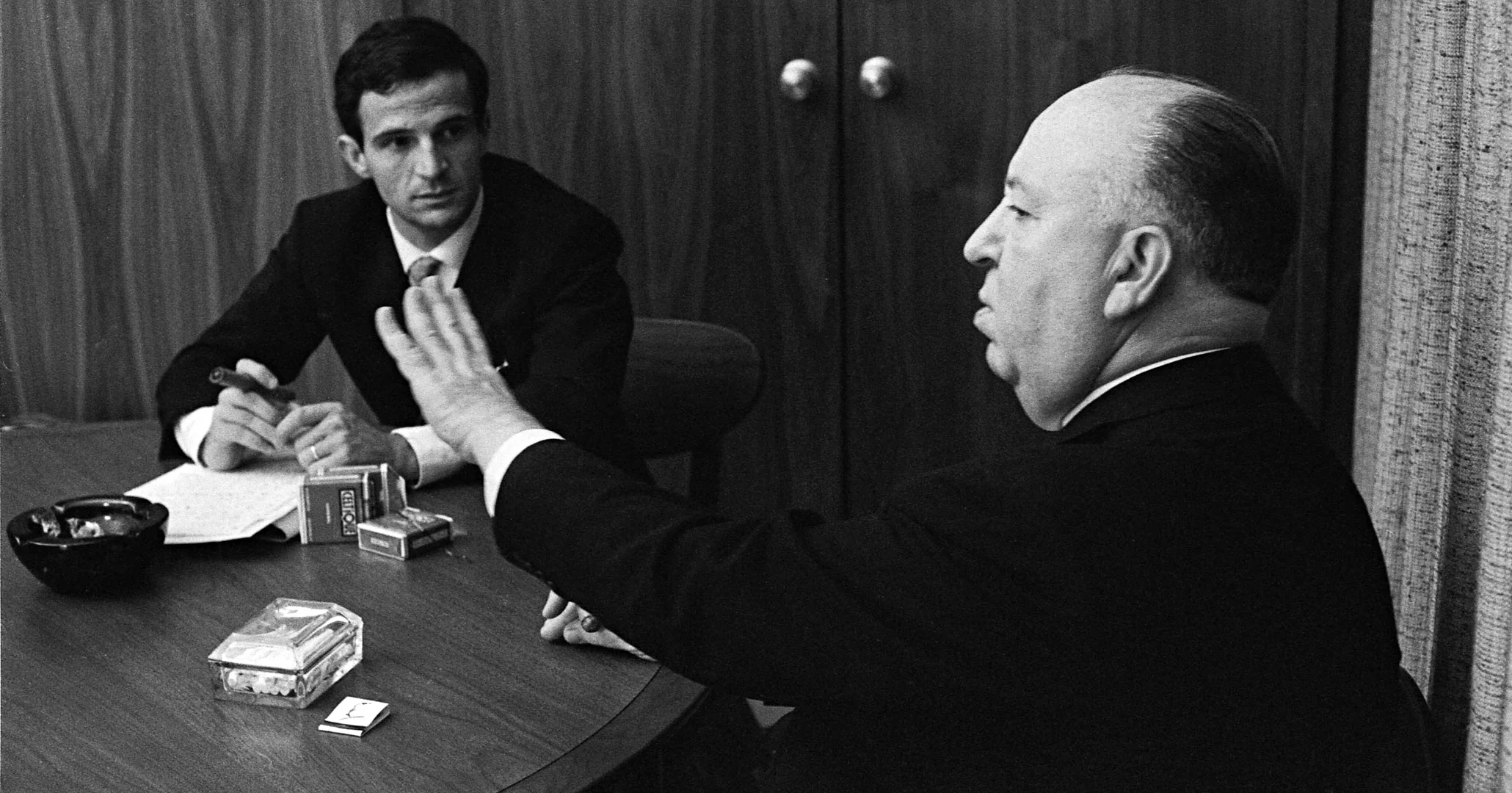
“Hitchcock/Truffaut” is a 2015 documentary film, readily available on HBO, directed by Kent Jones that details the inception of film director François Truffaut’s 1966 book Hitchcock/Truffaut.  The book was essentially the documentation of a series of conversations between Truffaut and Hitchcock.  The documentary spends a little time explaining how Truffaut reached out to Hitchcock, seeking to interview him about each and every one of his fifty-plus films and thereby capture the decision making process of the director.  But even more, Truffaut wanted to show the world that Hitchcock was one of the great auteurs, thus liberating him from his widespread reputation as merely an entertainer for the masses.  Since being published, Hitchcock/Truffaut has become a mainstay on the bookshelf of every film director.  “Hitchcock/Truffaut” is the story of the book, and its incredible effect on the movie world.

Purely as a documentary, “Hitchcock/Truffaut” moves very fast.  It is accompanied by an intense, zingy violin score that keeps tensions high.  Furthermore, the film features dozens of written documents gliding across the screen: letters from Truffaut and Hitchcock, director’s notes, and excerpts from the Hitchcock/Truffaut book.  The style of the documentary is like Ken Burns on amphetamines.  However, instead of losing impact, the fast pace keeps the subject of the film fresh, and forces the viewer to focus.  Aside from the accompanying texts, “Hitchcock/Truffaut” primarily features scenes from Hitchcock films, with a bevy of talking heads commenting on his directorial characteristics.  Amongst the interviewees are Martin Scorsese, Wes Anderson, David Fincher, Kiyoshi Kurosawa, and Richard Linklater.

“Hitchcock/Truffaut” details many different aspects of Hitchcock as a director, one such being his unpopularity among the actors he employed.  He could be almost draconian in his direction, never allowing his actors to stray from his own specific vision.  While discussing Hitchcock’s often rocky relationships with his actors, David Fincher makes the point that while acting is important, it is merely a single aspect of filmmaking.  It is easy to forget that.  In a given scene, the actors demand much more attention than things like the angle of the camera, or the lighting of the backdrop.  However, in every film these seemingly minor details require just as much decision making as the casting of the characters.  “Hitchcock/Truffaut” sheds light on the Hitchcock style, and the layers of decisions that went into it. It also realigns the viewers intake of films in general.

For many of those who see the documentary, “Hitchcock/Truffaut’s” analysis of the famed fetishes that riddled “Vertigo” might be most enjoyable.  Others might marvel at the frame-by-frame dissection of the scarring shower scene from “Psycho”.  It is indeed remarkable to listen to Hitchcock’s voiceovers explaining his craft.  However, in a grander sense, “Hitchcock/Truffaut” struck me in the way it revealed the interconnectedness of film.  As Hitchcock says in the documentary, the “power of the cinema” is drawn from its role as “the greatest known mass-medium there is in the world.”  For Hitchcock’s films this certainly rings true.  “Psycho” is the kind of movie almost everyone sees, and almost everyone is shocked by.  However, watching the varying directors who lend their voices to the documentary, you can also see how Hitchcock’s work penetrated even the most disparate filmmakers.  In what other context do you bring together the charming, detail-obsessed Wes Anderson and the precise, disturbing David Fincher? 

As the film points out, Francois Truffaut’s Hitchcock/Truffaut debunked Hitchcock’s light entertainer reputation and revealed him as a master artist of cinema.  “Hitchcock/Truffaut” is a fitting tribute to that revelation, and in the same vein as its subject, makes the ride both entertaining for the masses and the cinephiles.  In a world dominated by ten second videos and shallow memes, it is refreshing to take a look back at Alfred Hitchcock as a director who could grab the attention of a vast public with a product that is also revered at the highest levels of cinematic education.

July 11, 2017 /Robert Doughty
Comment

"The Wizard of Lies" Review

May 23, 2017 by Robert Doughty

OP-ROB RATING: STARTER

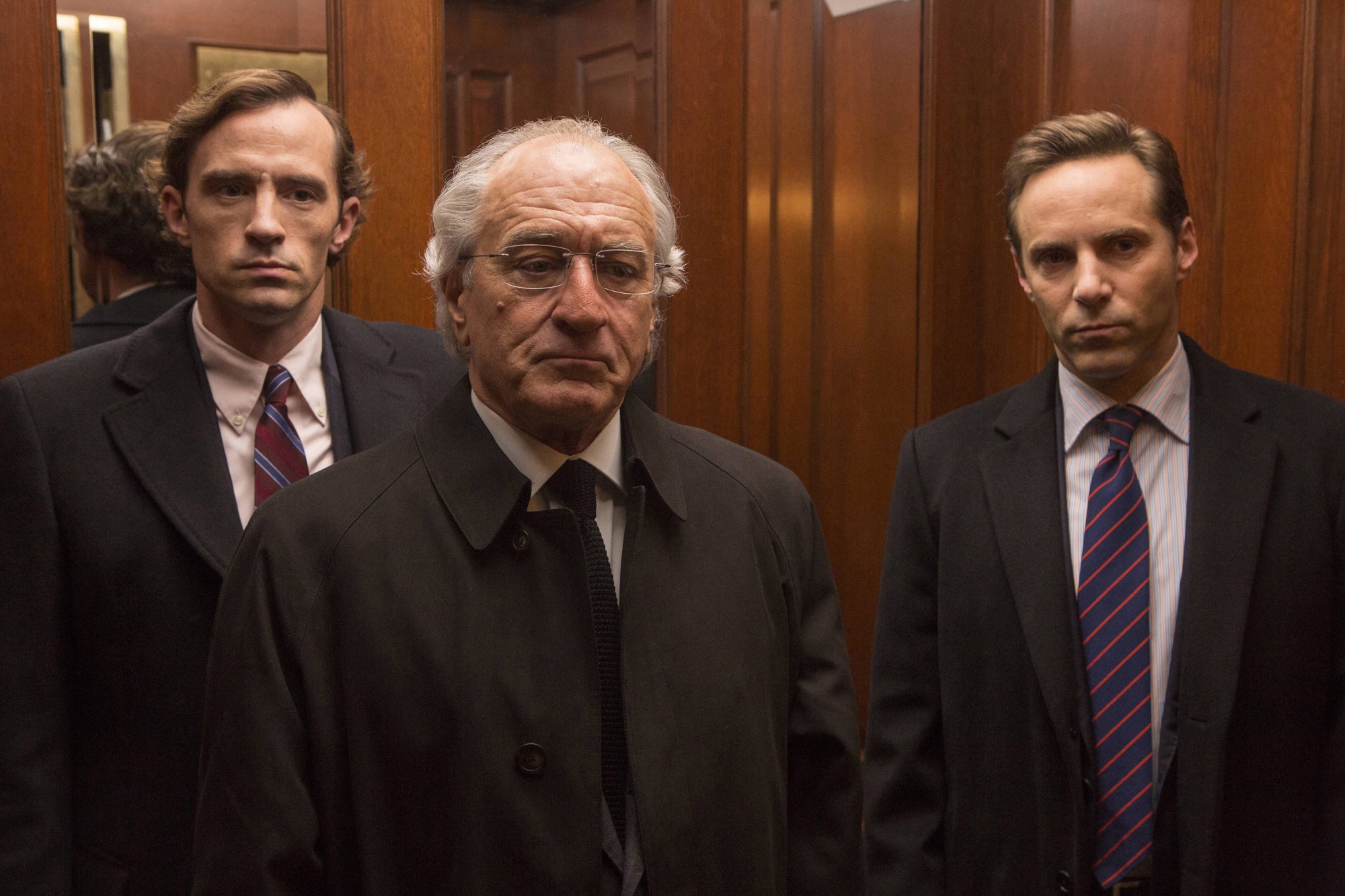
“The Wizard of Lies” is a film directed by Barry Levinson that aired this past weekend on HBO.  The film stars Robert De Niro as Bernie Madoff, the infamous broker and investment adviser who built the world’s largest Ponzi scheme.  In just a matter of months Madoff went from being one of the most revered investors on Wall Street to pleading guilty to eleven felonies and being sentenced to 150 years in prison. Over the course of around two decades he had stolen billions of dollars from unwitting and innocent investors, some of whom lost their entire life’s savings with Madoff.  For the most part, “The Wizard of Lies” is a matter-of-fact kind of biopic about Madoff, mainly detailing the period between the revelation of his scheme and his prison sentencing.  However, “The Wizard of Lies” betrays its own title.  The film is less about Madoff’s ability to deceive, and more about his apparent indifference to his crimes and his own family’s tragic demise.

Aside from Bernie, the main characters include Madoff’s wife Ruth (Michelle Pfeiffer) as well as his sons Mark (Alessandro Nivola) and Andrew (Nathan Darrow).  Levinson casts Madoff’s family as victims who were unaware of Bernie’s scheme.  Much of the film is about the unraveling of their respective lives, as they are treated as accomplices in the fraud.  Ruth visits her longtime hair salon, where she is denied service.  Andrew is verbally and physically attacked by a distraught investor while walking around Manhattan.  The worst torment is reserved for Mark Madoff, who languishes in his apartment hiding from paparazzi, slowly being crushed by the weight of his father’s crime.  Just a few years after their father’s arrest, Mark committed suicide and Andrew succumbed to cancer.  Ruth was forced to relocate to Florida to live with her sister, having lost all the luxuries of her former life.

The devastation of the Madoff family is a point of focus in “The Wizard of Lies”, and it is a tough angle to take.  A scene in which Andrew Madoff speaks to a group of college students narrows in on the difficulty of looking at the Madoff’s with compassion. One student asks Andrew, “Why didn’t you go on TV and state your case? Why didn’t you defend yourself?” to which Andrew replies, “I don’t know if I’m that sympathetic a character. At the end of the day I lived a life of great wealth and privilege… All of that subsidized by my father’s victims.”  It is a poignant moment in the film, and addresses the difficulty of depicting the hardships endured by the Madoff family. 

Although Levinson provides a lot of intriguing material on Madoff’s family, he glazes over much of what makes the case a recurring interest.  For example, we never get a good look at what got Madoff started in the first place: his ability to earn people’s trust.  De Niro’s sneering portrayal feels authentic, but is never offered a scene to depict the composure that Madoff employed to snag investors. Instead we get glances at Madoff in the final days of the scheme, when he was on the ropes trying to secure investments.  Furthermore, a crucial aspect of the Madoff fraud was his ability to leech from a trusting Jewish community in New York City. In his court hearing, audible shouts from the crowd decry Madoff’s betrayal of his religious family including Elie Wiesel, an Auschwitz survivor and the author of “Night”, who had invested everything with Madoff.  Madoff’s exploitation of his religious community is important in understanding the final point of the film, yet “The Wizard of Lies” provides little more than references that must be plucked from swathes of dialogue.

“The Wizard of Lies” also doesn’t offer much insight into the paradoxical nature of the scandal.  Anyone who is familiar with a Ponzi scheme knows one thing: it will eventually fail.  Yet Madoff never planned an escape route, or even thought of one to begin with.  Why would you rob a bank without a getaway car?   From my viewing, I think “The Wizard of Lies” is missing an adequate explanation for the banality of evil.  A 1988 Dutch murder-mystery film called “Spoorloos” or “The Vanishing” expounds on this topic when the filmmakers flip the script and follow the logic of the killer.  Throughout “Spoorloos”, we discover that the killer, who seems like a normal guy, committed murder for the same reason anybody might twiddle their fingers or stretch their legs.  Perhaps Madoff is cut from the same cloth as the villain from “Spoorloos”.  Perhaps he started his scheme because he could.  No goals, no pleasure, no intent, just because.

The ending of “The Wizard of Lies” takes a swing at the idea of “Spoorloos” when it suggests that Madoff is a sociopath.  In an interview with a reporter in prison, Madoff steams about a New York Times article that compared him to the mass-serial killer Ted Bundy.  The film ends as Madoff asks the reporter, “Do you think I’m a sociopath?”  The reporter’s response is not provided, but we have an idea for ourselves as the camera lingers on Madoff’s emotionless face.  The man betrayed his family, his friends, and even his entire religious community.  What values could he possibly have?  

Ultimately, “The Wizard of Lies” is a very good film.  It is crisply shot, methodical, and well-acted.  And yet, it somehow feels unfulfilled.  Madoff ruined thousands of people’s lives and a crime of such magnitude demands a reason.  Unfortunately, the most plausible one is simply, just because. “The Wizard of Lies” is a noble attempt to breathe life into such a vapid explanation, even if it misses a few notes here and there.

May 23, 2017 /Robert Doughty
Comment

Life Lessons From San Antonio

May 21, 2017 by Robert Doughty

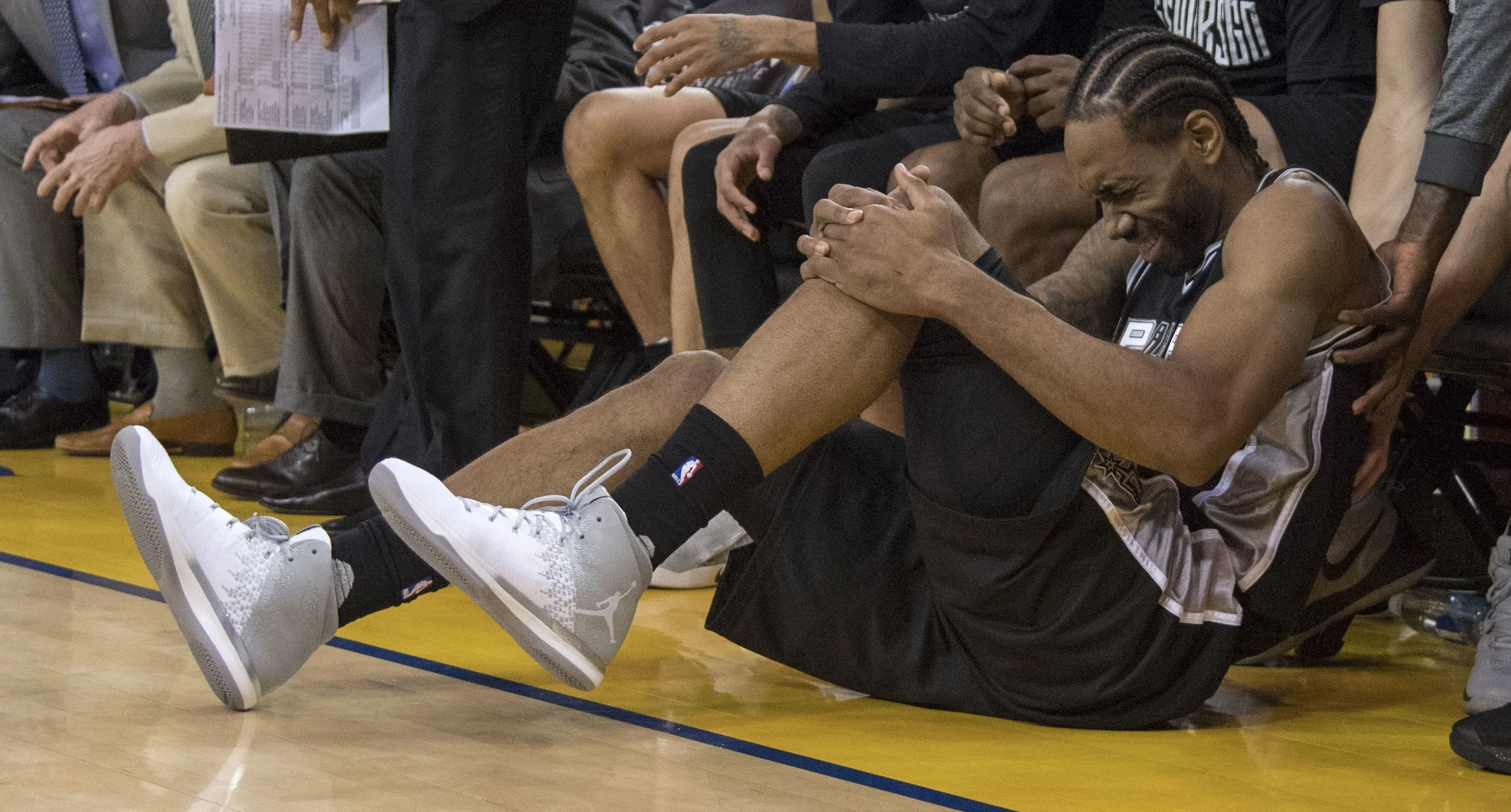
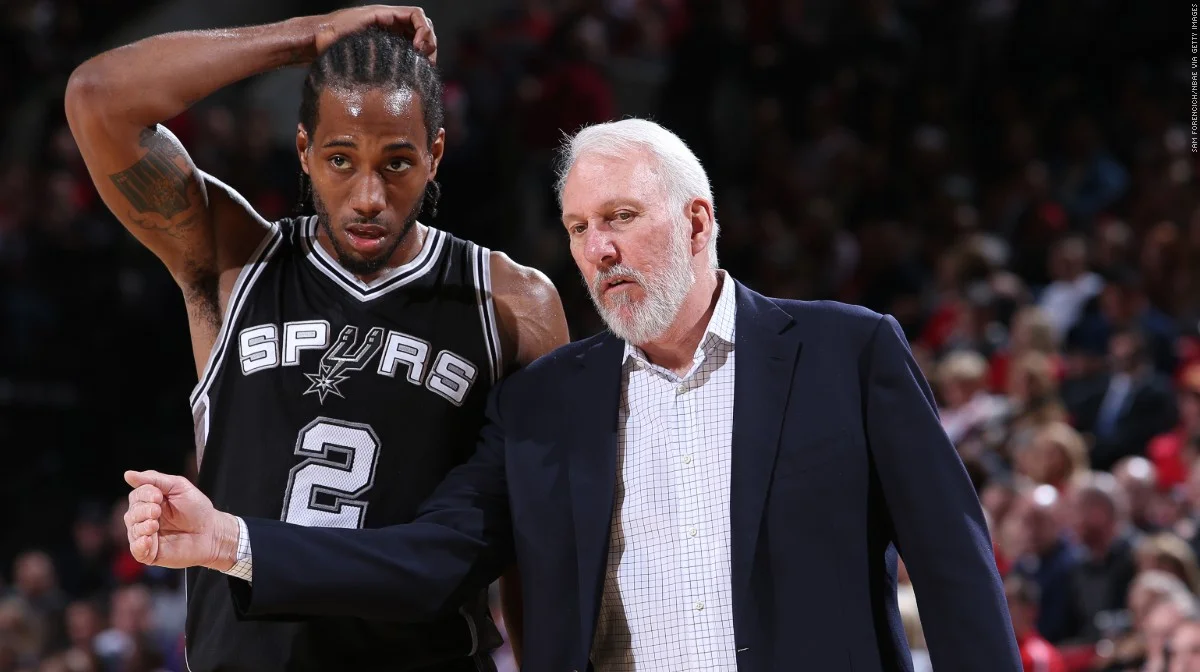
No NBA team in history has climbed out of a 3-0 deficit in a playoff series.  The San Antonio Spurs must face that daunting fact, as they play a historically great Golden State Warriors team in Game 4 of the Western conference Finals tomorrow night.  Furthermore, they must confront the challenge without the help of Tony Parker and MVP-Finalist Kawhi Leonard.  Tony went down with a ruptured quadriceps tendon in Game 2 of the Spurs series against the Rockets.  Kawhi is injured on account of what may or may not have been a nefarious defensive play by Zaza Pachulia that occurred in Game 1 of the Warriors-Spurs series.

Normally, I’m okay with accepting a Spurs playoff exit if they are bested by a clearly superior opponent.  And the Warriors may very well be superior.  Indeed, we’re talking about a Warriors lineup of four 2017 NBA All-Stars, two of whom have been league MVP before.  They are going up against a Spurs lineup with just one 2017 NBA All-Star, whose name is Kawhi Leonard, and wont be playing.  The Warriors are undeniably more talented.  But are they the better team?  The answer, unfortunately, is unclear.

Watch that clip of Kawhi crumpling under Pachulia’s extended leg again.  Look at the score: 76-55.  The Spurs were rolling in that game.  But after Kawhi left, the Warriors ripped off an 18-0 run, ultimately coming back to win the game 113-111.  If Kawhi doesn’t go down in Game 1, then dollars to donuts we are looking at a 2-1 Golden State lead in the series, at the very worst for San Antonio.  Who knows what would have happened in Game 2 and Game 3 if Kawhi had been able to play.  But regardless, that Game 1 outcome totally shifts the landscape of the series.  The hypotheticals are torturous. 

When Kawhi went down, I was enraged at Pachulia.  The Macedonian big man has a reputation for rough play, and I was convinced he intentionally walked under Kawhi, who had injured the same ankle just a few plays before.  Now, looking back on the series Pachulia’s potentially dirty play could have blown the entire series for the Spurs.  And on a more basic level, he may have intentionally taken out a good and honest man, who wanted nothing more than to lead his team and compete in the NBA playoffs.  Any Spurs fan, or basketball fan in general, would be justified to be angry.

However, over the past few years the Spurs have taught me a lot personally about how to react in such a situation. Because there are times in real life when you feel like you have a 20-point lead, and then fate slides a foot under you. I've been through a few moments when I felt like I was crumpled on the sideline, totally helpless and feeling like life is unfair. In such moments it's easy to be weighed down by the burdens of cynicism and regret.  It is easy to be angry, and dwell on your misfortune.

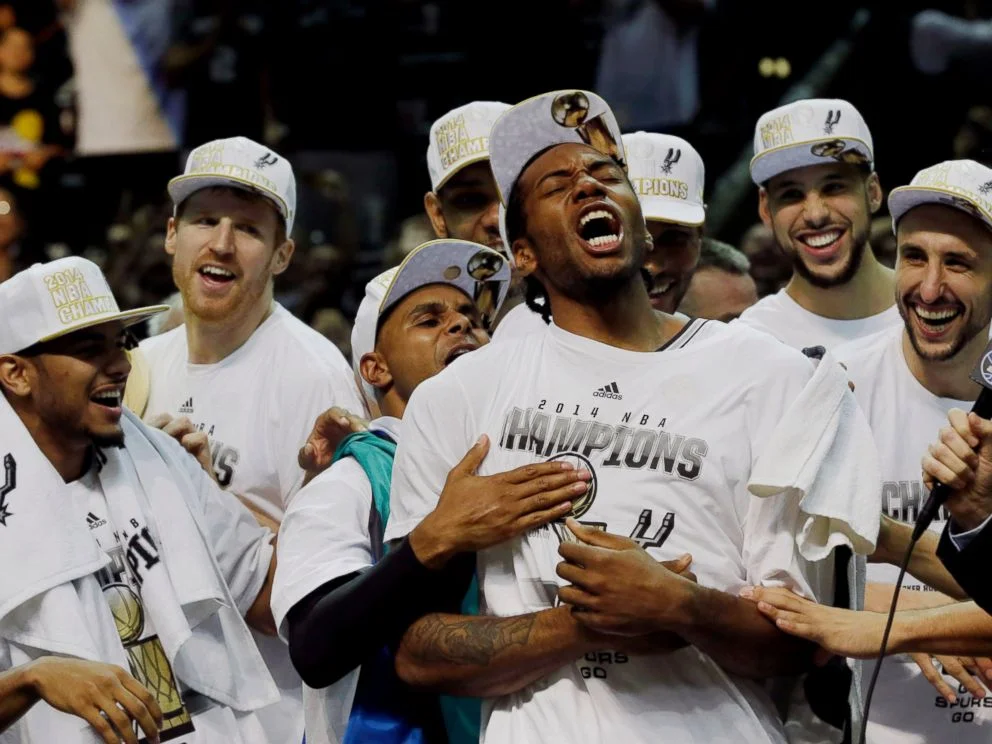
But the Spurs have shown me that there are other options.  Instead of idly rotting away, you can choose to snatch the pen from the authors of cruel circumstance and write your own next chapter.  The Spurs did this recently when they endured a long season beneath the looming shadow of their horrific 2013 NBA Finals loss against the ideologically opposite Miami Heat.  I remember watching Spurs games during that 2013/14 season, and the Game 6 three-point dagger from Ray Allen would be mentioned every matchup.  I’m just a fan, and during that season every commentator’s mention, or replay from the series would sting like new. Watching this video right now is still tough. I cannot imagine how the players felt having moments from that series on constant repeat.  However, during the season following the loss, the Spurs kept their heads down and focused all of their heartache into reaching the NBA Finals once again.  Once they got there, the Spurs throttled the very same Miami Heat in the 2014 NBA Finals, winning in just 5 games. The Spurs won by a combined 74 points, the largest deficit in Finals history. 

So now, with Tony out, with Kawhi out, and a postseason on the ropes, I'm not going to blame Pachulia or feel like this series is unfair. Because I know that come off-season, the Spurs won't either. They'll do what they have always done, keep fighting, and one day in the near future Pachulia's extra step will be a minor footnote in a great journey.  Having said that, let’s come out tomorrow night and win one for Kawhi. Go Spurs Go!


May 21, 2017 /Robert Doughty
1 Comment

"Guardians of the Galaxy 2" Review

May 06, 2017 by Robert Doughty

OP-ROB RATING: BUST

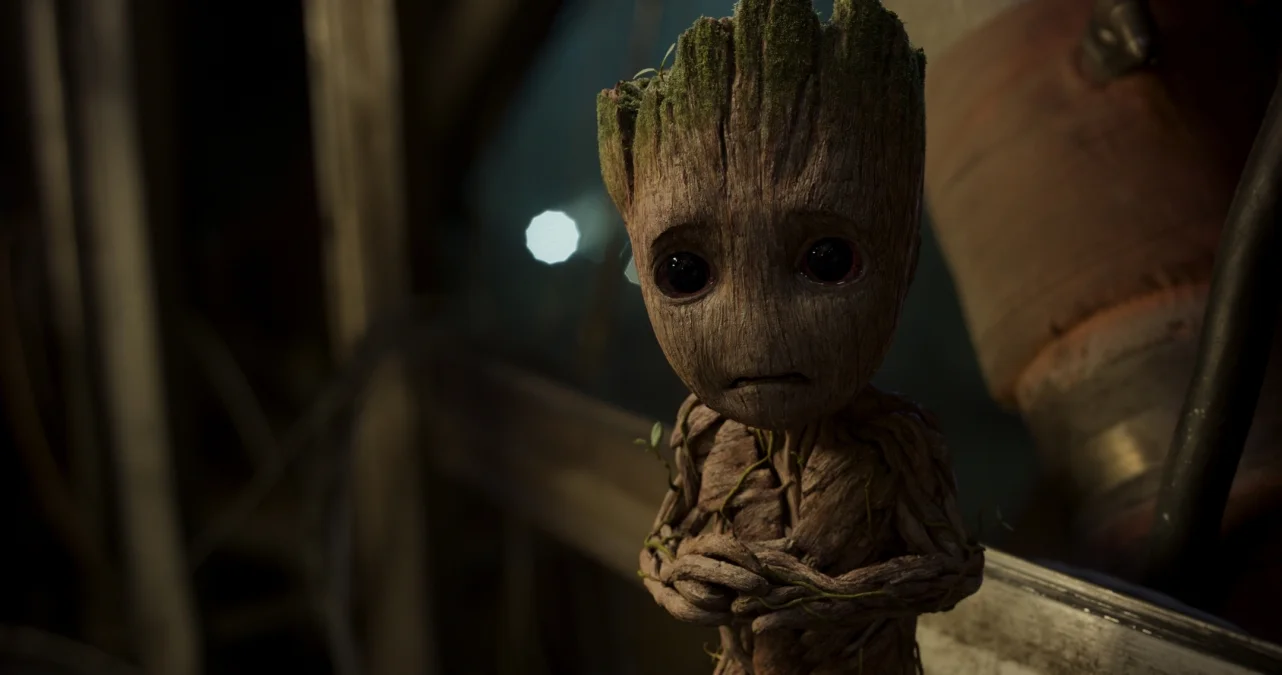
“Guardians of the Galaxy 2” opens with all the familiar characters from the first film: Peter “Starlord” Quill (Chris Pratt), Gamora (Zoe Saldana), Drax (Dave Bautista), Rocket (Bradley Cooper) and the reincarnation of Groot (Vin Diesel) who is now “Baby Groot”.  In the first scene the Guardians are tasked with fighting off a space monster that seeks to destroy some invaluable space batteries belonging to the gold-crusted “Sovereign People” in exchange for Gamora’s criminal sister Nebula (Karen Gillan).  The intro credits role as the motley crew struggles to fend off the monster and Baby Groot dances around the battleground to the tune of Electric Light Orchestra’s “Mr. Blue Sky”.  After killing the monster, Rocket decides to steal the batteries just for the fun of it.  However, Rocket’s selfish act leads to a near deadly attack by Sovereign spaceships and the Guardians are forced to crash land on a woodland planet called Berhert.  Within minutes of landing, the group is confronted by a dapper, kingly looking man named Ego (Kurt Russell) who emerges from a spaceship that looks like a white chocolate Cadbury Crème Egg.  Ego declares that he is Quill’s father, and insists that everyone come visit his home planet. After some deliberating, Rocket is left on Berhert to repair the ship with Nebula and Baby Groot as company.  Quill, Gamora, and Drax all board Ego’s ship, where they are introduced to Mantis (Pom Klementieff), Ego’s “empathic” servant girl.

            In the next few scenes, Rocket encounters some trouble when Yondu (Michael Rooker) and his Ravagers from the previous film track down the crash-landed ship.  But the far stranger development occurs on Ego’s planet, which is aptly named “Ego’s Planet”.  Upon arriving Ego explains that he is a “celestial” which is essentially a god.  Over millions of years Ego learned to create his human form and subsequently build his own planet.  However, being lonely, Ego sought out other life forms ultimately leading to Earth where he met Peter Quill’s late mother.  This whole timeline is explained as Quill, Gamora, and Drax amble through Ego’s palace; the scenes from the timeline are depicted through peculiar shape-shifting ceramic statues.  Despite Ego’s warm welcome, Mantis tells Drax that he and his friends are in danger.  I won’t spoil the twist, but it comes shortly after a scene in which Peter Quill and Ego bond by playing catch with a conjured ball of shining blue energy. 

            If any of that explanation sounded too strange, well, it’s what happened.  By the time we enter Ego’s Planet, “Guardians of the Galaxy 2” has ramped up the weirdness a full ten notches above the previous film, which was bizarre in its own right.  While this second installment of “Guardians of the Galaxy” shares many similarities with its predecessor, there are two definitive characteristics that set it apart.  For one, the outlandishness of the film is over the top.  Ego’s planet is akin to a colorful, bubbly, LSD-induced trip.  In one scene Drax asks Mantis, “how did you get to this weird, dumb planet?” The audience is asking themselves the same question.  The second major difference is that the plot revolves around Quill’s relationship with his absentee father and similarly around Gamora’s relationship with her abused little sister, Nebula.  These strained bonds culminate in different ways, yet are equally cheesy in their execution. 

This brings me back to when I saw the first “Guardians of the Galaxy” at a dingy little theater in Lebanon, New Hampshire. The seats reeked of that blue chemical stuff you find in port-a-potties and the screen was dented squarely in the center.  Usually, these things would be enough to ruin a movie for me. Yet, by the time Quill had put on his Walkman and queued up Redbone’s  "Come and Get Your Love", the nastiness of the theater had melted away. That is what "movie magic" does. It transports you away into a different world. The first “Guardians of the Galaxy” was funny, weird and imaginative all while being neatly wrapped into a standard Marvel plot.  This second installment feels like a cheap knockoff of that first charming film. It feels like “Guardians of the Galaxy: The TV Special”, with all of the secondary plot lines, jokes, and songs that didn't make the first cut.  Peter Quill’s quips are less spontaneous; Rocket’s jabs pack less punch, and Drax’s literal interpretations go from being funny to overdrawn by the end of the film.  The soundtrack is still strong, but references to it are so obvious that it robs the subtlety from the tunes.  Furthermore, the plotline is dominated by phony father-son, sister-sister relationships that sap the energy right out the action.  Perhaps the first film was just as weird, and the camaraderie piece just as tacky, but those aspects were unnoticeable because of the sheer joy elicited from watching such a peppy, original film.  Is “Guardians of the Galaxy 2” overwhelmingly bad? No. But it is less inspired in every category.  It is a prime example of what Hollywood movies have become in America today.

            Walking into the theater for “Guardians of the Galaxy 2” I passed posters for “Spider-man: Homecoming”, “Alien: Covenant”, “Baywatch”, “Transformers: The Last Knight”, “The Mummy” and “The Nut Job 2: Naughty by Nature”.  Notice anything these advertisements have in common?  They are all remakes or sequels.  Granted, some of those films may turn out to be very good.  But if the history of sequels and remakes is any indication, maybe one of them will truly be worth watching.  In the long hallway of posters there was a single fresh adaption: “Captain Underpants: The First Epic Movie”.  That is where we are at now.  It brought to mind a 2014 article called “The Birdcage” from the now defunct website Grantland.  In the article the author insightfully describes the sequelization of Hollywood, and how to be a great studio executive you “make your bones by showing you can maximize the potential monetization of a preexisting brand or reawaken a dormant one.” The result is a bevy of prepackaged, hackneyed films. Reading that article a few years ago, I didn’t feel the author’s same dread.  I had seen “Guardians of the Galaxy”, a Marvel summer blockbuster, mainstream of the mainstream, that was completely novel.  But if there is anything to take away from “Guardians of the Galaxy 2”, it is that no franchise is immune to being recycled, tweaked, and re-released at the expense of the viewers.


Link to Grantland article: 

http://grantland.com/features/2014-hollywood-blockbusters-franchises-box-office/


May 06, 2017 /Robert Doughty
1 Comment

Despite a fantastic regular season, the Spurs are in rebuild mode

May 02, 2017 by Robert Doughty

Last night the San Antonio Spurs lost very badly to the Houston Rockets, 99 - 126. I think there remains a good chance that they win the series. And there will always be a little voice in my heart that says they can win the title. But if I'm honest, the Spurs are in a rebuild mode. They are in just as much of a rebuild mode as many teams that missed the playoffs entirely.  Vital pieces need to be added.  I won't go so far as to say they are in the same boat as the Lakers or the Sixers, but the overall term can be used for each team. However, unlike those obvious rebuilding projects, the Spurs rebuild is deceptive:

It looks like 61 regular season wins.

It looks like the best regular season defensive rating in the league.

It looks like landing a #2 seed in the loaded Western Conference.

It looks like Kawhi Leonard putting up an MVP-worthy season.

But don't let those signs fool you into thinking the Spurs are championship-ready. 

Last year when the Spurs were dismantled by the Thunder I was very disappointed, but I also knew that the better team had won.  San Antonio took a 2-1 series lead by riding Kawhi Leonard and LaMarcus Aldridge’s combined scoring average of 57.6 points per game in the first three matchups.  In the following three games those numbered teetered off to 42.3 and San Antonio dropped all three losing the series 2-4.  The Spurs simply didn't have a healthy premiere point guard or enough young firepower on the wings. Durant and Westbrook had ripped the reigns away from Leonard and Aldridge combining for an average of 59.3 points over the last three games.  Rim protection was lacking and Steven Adams ruled the paint like a bully in a sandbox.  As a Spurs fan, it was a sobering experience made even more potent by Tim Duncan’s retirement two months later in July.  But at least we knew what roles the team needed to fill for a championship the next year.

In the offseason the Spurs revitalized the point with... a raw, athletic rookie in Dejounte Murray? They added rangy athletic wings such as... rookies Davis Bertans and Bryn Forbes? They locked down the paint by signing old man Pau Gasol and Dewayne Dedmon?  That is what rebuilding looks like.  Adding undeveloped young talent and older veterans to ease the transition.  Yet I never think to associate the word “rebuild” with the Spurs because they have been winning 50+ games every season going back to when Hoya-legend Bill Clinton was in the White House.  Yet now, this postseason the Spurs have the same exact problems against the Rockets that they had against the Thunder in 2016, except they have brought three promising rookies along for the ride.

If the Spurs are going to win with Kawhi and LaMarcus, then they need a star middleman between the two.  Unlike many fans, I have not given up on LaMarcus Aldridge.  However, I do believe he can only be maximized as a third-option scorer.  That is why striking out on Kevin Durant continues to looks like a massive loss for an otherwise championship-ready Spurs roster. 

Ultimately, I'll enjoy this series and hope the Spurs can make enough adjustments to handle the Rockets’ high-powered offense. But I wouldn't be too surprised if Houston continues to feast on this Spurs squad, closing the series in 6 games or so.  If that happens I'll be  sad for the guys, especially Kawhi, but I won't be as disappointed as last year. Because I also wouldn't at all be surprised if in a year or two, we are witnessing a perfectly crafted Spurs team led by peak-Kawhi Leonard. I wouldn't be surprised if Dejounte Murray has developed into a Shaun Livingston-esque point guard to lead the second unit with Davis Bertans and Bryn Forbes ready for catch-and-shoot threes. I also wouldn't be surprised if the Point-God Chris Paul signs with San Antonio and finds a post-prime renaissance under Pop's system. 

Most importantly, I wouldn't be surprised if in the next couple of years I look back and think, "wow, those disappointing playoff exits were part of a process for something great".   Right now, as a Spurs fan, I need to trust the process.  But not the kitschy kind of “Trust the Process” that has defined the tanking-rebuild in Philadelphia.  I’m talking about trusting that the Spurs will continue to win while adding pieces and building on the basketball culture that has developed out in the southernmost parts of the Lone Star State.  Let’s not lose faith and keep the bigger picture in mind, but still go out and crush the Rockets in game 2 tomorrow.  Go Spurs Go!


May 02, 2017 /Robert Doughty
1 Comment

"The Lost City of Z" Review

April 26, 2017 by Robert Doughty

OP-ROB RATING: BENCH

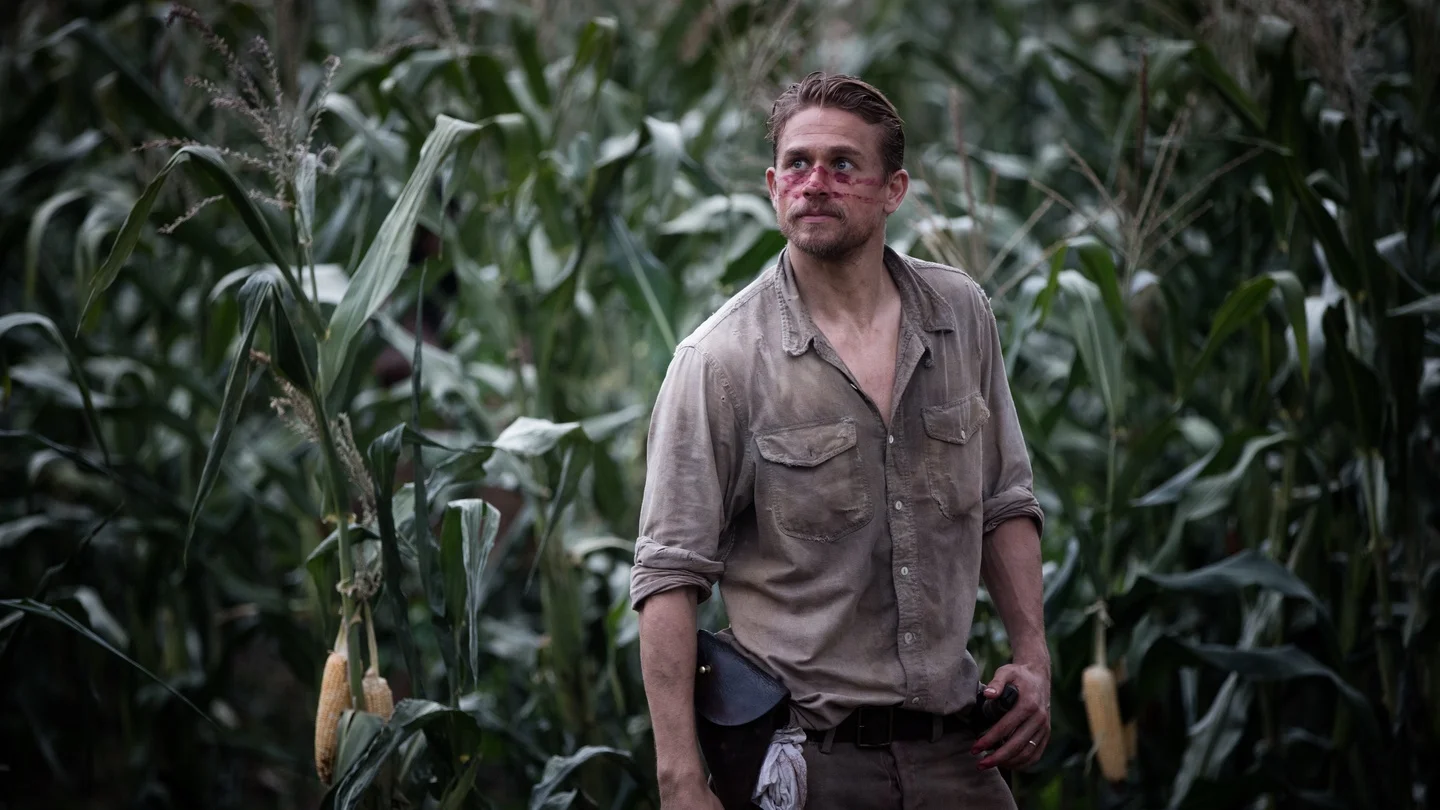
“The Lost City of Z” opens in the green pastures of Ireland, where a young man named Percy Fawcett (Charlie Hunnam) is stationed with the Royal War Office.  Fawcett is a sharp and capable soldier, yet he fails to gain advancement because of his father’s reputation as a gambler and a drunk.  Fawcett’s fortune’s rise when he receives a surveying appointment from the Royal Geographical Society that could restore his family name.  The task is to discover the source of the Rio Verde in Amazonia (modern day Bolivia/Brazil).  Fawcett accepts the lengthy challenge, leaving behind his pregnant wife Nina (Sienna Miller) and toddler Jack (Tom Mulheron).  On the journey Fawcett is accompanied by a crew, including Henry Costin (Robert Pattinson), a gruff and experienced surveyor. The rigors of Amazonia prove to be extremely precarious.  For example, while rafting up river the crew is periodically attacked by bow-and-arrow wielding natives who linger behind bushes on the banks of the Rio Verde.  In one instance a man is shot and falls into the river to be mauled by piranhas. Despite the dangers, Fawcett and Costin succeed in their mission to discover the source of the Rio Verde, mostly thanks to a knowledgeable native guide.  Over the course of the trip the guide mumbles a few things to Fawcett regarding a once-great city deep in the jungle.  Fawcett shrugs off the comments until, at the source of the river, he finds several pieces of pottery and some engravings on trees. 

Upon returning home Fawcett is hailed as a hero and the foremost explorer in Britain.  With his family name restored, Fawcett has the ability to live his life uninhibited. However, throughout the rest of the film he returns to Amazonia two more times, with a stint in World War I in between.  The reason for his subsequent explorations is a fascination with finding the lost city the native guide spoke of.  Fawcett becomes more and more obsessed with finding the city he refers to as “Z”.  His British peers sneer and scoff at the idea of a great city buried in the jungle, and there are more than a few scenes in which Fawcett urges his compatriots not to underestimate the “savages”. 

As a film, "The List City of Z" is undeniably well done. Hunnam is believably resolute as Percy Fawcett for most of the film. His choppy, assured early 20th century British dialogue is executed consistently. However, as Fawcett's delusions become clearer Hunnam tends to oversell it.  Sienna Miller is more impressive as Nina.  Her scorn of the search for Z slowly evolves into reluctant approval.  By the end of the film she is equally as invested as her husband, who has been mostly absent because of his quest for glory.  As the signs build up that Fawcett's mission is far-fetched, and destructive to his family, we never question the conviction of the main characters motivations.  For the most part we believe that they believe. 

 The cinematography is equally as steady and authentic. Throughout the film the camera just glides along the intriguing landscapes of Ireland, Britain, and Amazonia.  The camera’s omniscience doesn’t lead to any surprises or shaky shots.  One could argue the technique is simple, crisp, and unassuming.  However, I have a feeling the camerawork is meant to add to the impending sense that Fawcett’s mission is doomed.  His ultimate fate is as certain from the opening scene to the final credits.  What is equally interesting is how the matter-of-factness of the film contrasts with Fawcett’s growing delusion about finding the lost city.  On the second exploration in Amazonia, Fawcett and Costin are invited to hang out with a tribe of cannibals.  While in their village, Fawcett spots a small patch of cultivated land.  Upon seeing it, Fawcett points it out to Costin and exclaims that this agricultural feat must mean that Z exists!  After Fawcett shuffles away there is a split second in which Costin turns to the camera and stares blankly, expressing his and the audiences skepticism. 

Unfortunately, as the film drags on and Fawcett grows more obsessed with the vanished city, the subtleties that made the scene with Costin so effective also vanish.  On Fawcett’s final expedition to Amazonia he brings Jack (Tom Holland) who has now grown up.  In one of the final scenes the two are taken hostage by group of natives.  As the captors discuss what to do with them, Fawcett tells his son that, “whatever happens, it is our destiny.”  With your eldest son’s head so close to the literal chopping block, one wishes that Fawcett could have come up with some better words.  

“The Lost City of Z” amounts to a well made, yet ultimately fruitless adventure.  The most significant aspect of the film are Fawcett’s motivations and the effect they have on his family and friends. There are much better movies, such as “There Will Be Blood”, that explore the same kind destructiveness that can be caused by unbridled ambition.  Perhaps it is fitting that the final impression of the “The Lost City of Z” coincides with Fawcett’s own expedition.  A few screen titles at the end of the film tell us that Fawcett disappeared along with Jack on that final expedition, and a lost city of Z was never found.  In the end, “The Lost City of Z” is an overdrawn film that never really hits a full stride.  On a rainy spring day, moviegoers would be wise to explore elsewhere.


April 26, 2017 /Robert Doughty
Comment

"After the Storm" Review

April 02, 2017 by Robert Doughty

OP-ROB RATING: ALL-STAR

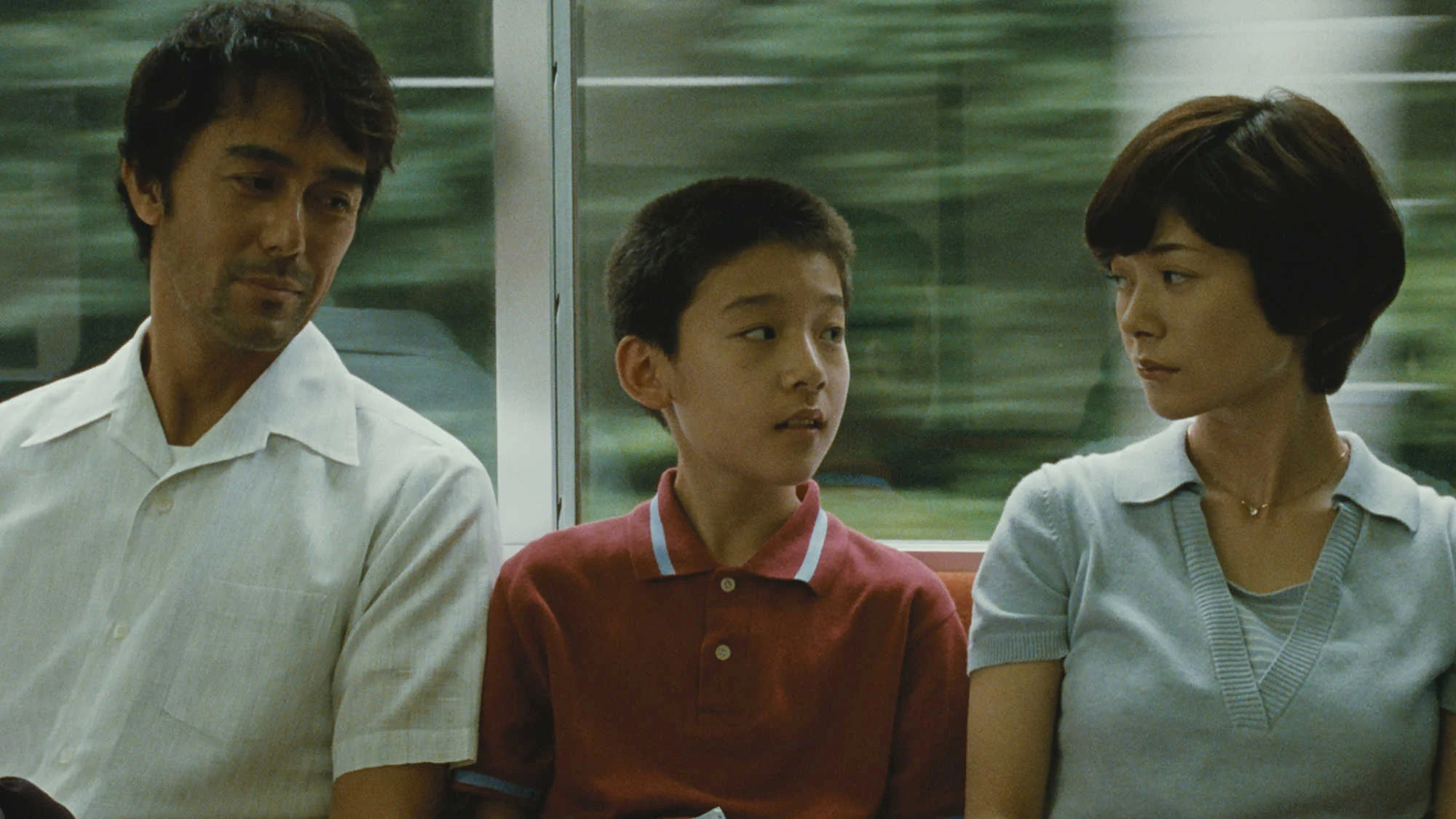
Ryota (Hiroshi Abe) is a middle-aged novelist who started a promising career by publishing an award-winning book called “The Empty Table”. He has since been married, had a child, fallen into debt, and gotten a divorce.  Now his career as a novelist seems like a footnote in comparison to his other problems. Kyoko (Yōko Maki) is Ryota’s ex-wife; she works in real estate and has custody of Shingo (Taiyô Yoshizawa), Ryota’s twelve-year-old son. While Kyoko seems cold, she just wants what is best for Shingo and herself.  Shingo is a quiet youngster who plays baseball, it is fitting that instead of swinging aimlessly for home runs, he always tries to draw a walk.  It is he that has the complicated task of keeping a relationship with his estranged father. Tying the three together is Ryota’s grandmother, Yoshiko (Kirin Kiki), who in her fun-loving appeal manages to keep a relationship with all of them.  These are the main characters in Hirokazu Koreeda’s new film “After the Storm”, which has hardly anything to do with storms.

The story swirls around its flawed main character, Ryota, who is masterfully portrayed by Hiroshi Abe.  On the surface, he seems like a despicable character.  A divorced gambling addict on the verge of being evicted from his tiny one room apartment, Ryota spends his days doing the sleazy work of a private detective, sometimes spying for clients and other times spying on his ex-wife.  In a vexing scene, Ryota secures a decent commission only to gamble it all away at the cycling racetrack.  Without a doubt, Ryota is a deadbeat dad who deserves little sympathy.  However, it is impossible not to feel something for the downtrodden novelist.  In Abe’s long, unshaven, and weathered face you can see goodness and a desire to do the right thing.  It takes a skilled director-actor pair to generate this kind of unearned sympathy for such a disappointing character.  Within Ryota there is also a metaphor for the deceiving nature of gambling.  As Ryota assures his detective colleague, if he wins at the track he can buy cleats and a baseball glove for Shingo and pay for rent.  The desire is true, but the treacherousness of gambling robs it of any virtue.

            Where “After the Storm” hit me personally, was in its message about dreams and responsibility.  As a college student, it seems as you get closer and closer to graduation people stray from their passions and focus their efforts on preparation for “the real world”.  It is easy to scoff at these people and view them as sellouts.  But the real world is undoubtedly coming, and when the unsuccessful dreamers cant buy baseball cleats for their children they may wish they had been more practical during college.  Life changes, and with it your desires and obligations change.  The comedic, high-energy senior Yoshiko has more than a few wise musings on this topic throughout the film.  Your dreams do not take priority over your family.  This resonates within the character of Ryota, who has never swallowed that pill.  In one scene Yoshiko tells her “late blooming” son to “hurry up, or I’ll haunt you!” as she staggers toward him like a ghost.  In another scene Ryota faces this problem quite starkly when he is given an opportunity to write for a Manga comic book.  He turns it down out of pride, and out of his dream of becoming a self-sufficient novelist.  It is a damning symbol of irony that Ryota’s one award-winning book is called “The Empty Table”.

“After the Storm” does not do anything groundbreaking.  There are no gimmicks or twists.  The cinematography is simple and unstylized.  And while there are grand analyses of human nature that arise from the story, Koreeda never thumps them over our head.  In one particular scene midway through the movie, Ryota excitedly takes Shingo to a lottery kiosk to buy tickets.  Ryota explains that his father had taken him to do the same as a child.  It was at this moment that you could hear the air get sucked out of theater, as there was a collective sigh from the audience.  Unprompted by a musical buildup or a dramatic flashback, Koreeda delivers a stinging example how the sins of the father can affect a generation through modest words and expressions.  

In the end, “After the Storm” does not leave you feeling excited or inspired like a family-drama such as ”Little Miss Sunshine” would.  What it does make you feel is hope for man stuck in generation-old habits and a debilitating urge to regain what he has lost forever.  As Shingo asks Ryota, “Are you who you wanted to be?” his father replies, “I’m not. Not yet.”  If you look closely, there are enough signs throughout the film to suggest he might be on the way. 

April 02, 2017 /Robert Doughty
Comment

"Kedi" Review

March 26, 2017 by Robert Doughty

OP-ROB RATING: STARTER

For those that speak Turkish, you may be able to guess what Ceyda Torun’s documentary “Kedi” is about simply from the title.  In the native tongue of the bustling city of Istanbul, Turkey, kedi means cat, and “Kedi” is a documentary about their influence on the historic city.  Unlike any major western city, Istanbul is graced by the presence of thousands of street cats.  Several residents throughout the documentary lend a bit of knowledge as to how the cats arrived:  many of which came on ships when the Ottoman Empire was the trading hub of modern civilization.  Now the diverse cat population has cemented itself in the identity of the city.  Throughout the film “Kedi” details several different cat profiles: one is deemed a “hunter cat”, another a “psycho cat”, and so on.  The cats are amusing, yet the real stars of “Kedi” are the humans that interact with them.  The cat-human relationship lends itself to a greater understanding of life, happiness, and the inherent goodness in all of us.

Perhaps most amusing of the cat profiles is Duman. A middle-eastern version of Garfield that lingers outside a fancy delicatessen and eats only the finest smoked meats and cheeses. A chef in the restaurant explains that Duman will never beg at the customer’s outdoor tables, because he is a gentleman. But instead he paws at the window when he is hungry.  With the exception of one cat named Alan Parçasi, who works tirelessly to rid a restaurant of mice, I found myself questioning why all these people provided for their cats.  Why sacrifice for a thankless pet?  “Kedi” provides a complex, and ultimately fulfilling answer to this question as the stories line up.

One of the episodes stars Bengu, a cat that lives to be caressed and smothered with attention yet shows no appreciation and will disappear at a moments notice.  His owner makes a comment about cats that “they're not ungrateful they just know better”, he says, “It is said cats are aware of God’s existence. While dogs think people are God, cats don’t.”  It is a fascinating observation that could only be provided by someone of deep spirituality.  As the cats and their human counterparts are introduced throughout the film, it becomes clear that to have an appreciation of cats, you must share in this calm understanding of God’s existence.  Since most cats act aloof as to the people that feed and house them, it is obvious why many people prefer dogs, which are loyal and usually admire their masters.  To love a cat is to reach something deeper within the human spirit.

The one glaring weakness in “Kedi” is its length.  At 80 minutes the film has an abundance of shots that simply meander around Istanbul following random cats.  These scenes serve as unnecessary fluff, and force what should have been a 40-50 minute short film into a full-length feature.  Granted, the cinematography is crisp and provides a fulsome profile of the city.  The soundtrack is also delightful.  However, towards the end of the film I found myself growing weary of all the cats.  Despite this, the tidbits of insight on the human experience offered in “Kedi” override its overdrawn run time.  While certainly not a must see, “Kedi”, like Duman, offers enough sightly leisure to make the commitment worth it.


March 26, 2017 /Robert Doughty
Comment

"Get Out" Review

March 10, 2017 by Robert Doughty

OP-ROB RATING: LEGEND

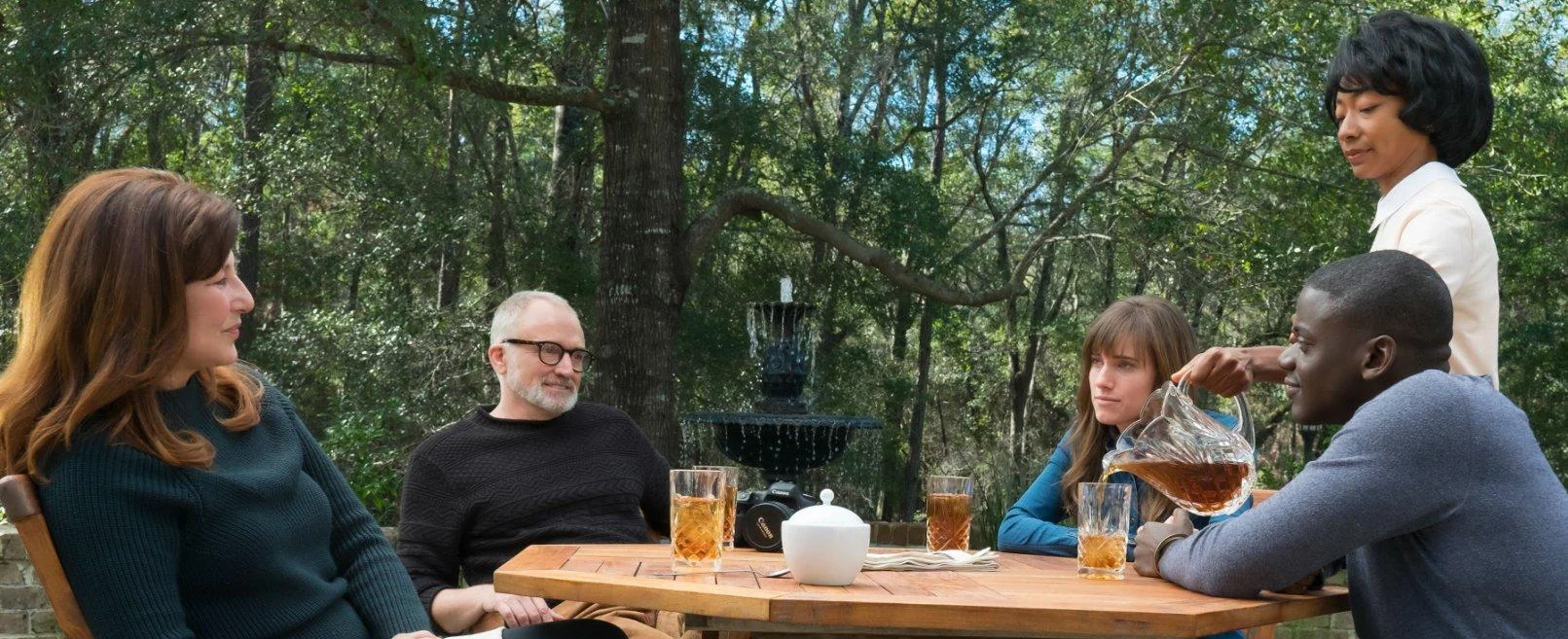
Chris Washington (Daniel Kaluuya) is a talented black photographer and Brooklyn native who has fallen in love with a white girl named Rose Armitage (Allison Williams).   Having dated for nearly six months, Rose convinces Chris to take a weekend trip to the countryside so he can meet her family.  Chris is concerned that the Armitages are going to be unpleasantly surprised by the fact that he is black, but Rose assures him not to worry.  Upon arriving to the estate Chris is greeted by Rose’s parents Dean (Bradley Whitford) and Missy (Catherine Keener), a neurosurgeon and psychiatrist, respectively.  Chris is also introduced to the Armitage’s black house workers, a maid named Georgina (Betty Gabriel) and a handyman named Walter (Marcus Henderson).

Right off the bat things at the Armitage house seem a bit strange, especially with Georgina and Walter, both of whom act unwelcoming towards Chris.  Furthermore, when he sneaks outside in the middle of the night to smoke a cigarette, Chris sees Walter sprinting around the yard at full speed.  Rose’s parents seem normal enough at first.  Dean gives off a distinct eastern white liberal vibe as he shows off the cultural artwork in the house and comments on how much he hates the “look” of having black workers.  Missy is somewhat more reserved, but offers to help Chris with his addiction to smoking cigarettes by using hypnosis.  When Chris reenters the house from his smoke break, Missy lures him into her therapy office where she hypnotizes him into “the sunken place”.  The rest of the visit plays out with an ever-growing sense of unrest for Chris.

As a horror movie, “Get Out” is truly first class.  The climax of the film is shocking, and debut director Jordan Peele masterfully executes the detailed build up.  As Chris interacts with the Armitages and their friends he slowly begins to feel more and more uncomfortable.  His genuine love for Rose keeps him from leaving until the family can ensnare him in their sinister operation.  The more comic side of the film is shouldered by Rodney (Lil Rel Howery), a TSA agent and Chris’ best friend.  Chris contacts Rodney several times throughout the film to update him on the increasingly strange visit. The things that Chris observes all provide little clues to his, and the audience’s final revelation.  It is only after the film that you look back and think, “Ah-ha! That’s what that meant…” The all-around dynamism of “Get Out” also shows Peele’s appreciation of the horror genre as a filmmaker.  “Get Out” harkens back to classics such as “Rosemary’s Baby” with its meticulously executed buildup; “The Cabinet of Dr. Caligari” with its theme of hypnotism and disassociation, and “The Evil Dead” with its gory finish. 

The most impressive aspect of “Get Out” however, is not the overall quality of the filmmaking, but rather the complex racial message that underlies the film.  “Get Out” is a critique of a growing faction of modern progressive whites that want to absorb black culture, but not actually interact with black people in a meaningful way.  In “Get Out”, these white people’s goals are manifested in an evil and incredibly creepy way that I won’t spoil.  But it also happens in everyday life through small, seemingly harmless interactions.  Peele subtly points out some of these racial mannerisms throughout the film.  For example, when Dean first meets Chris he feels the need to confidently confide that he had voted twice for Barack Obama and that he would have voted for him a third time if he were on the ballot, adding, “best President of my lifetime.”  Many of the Armitage’s friends also make comments championing the athletic accomplishments of black athletes including Tiger Woods and Jesse Owens.  The white people in “Get Out” sincerely appreciate black culture as it relates to athletic competition and “being cool”.  But do they see blacks as anything more than just commodities for better performance and social perception? 

Overall, “Get Out” packs the punch of a generational horror film infused with a complex and bravely frank racial message.  Films such as this do not come around often, if ever.  After walking out of the theater, besides feeling giddily shocked by the thrills of the film, I also found myself asking questions about my own relationship with black culture and black people in a way I had never before considered.  In the unraveling of its story, “Get Out” forces viewers to reconsider the details in the scenes and even the meaning of the title of the film.  More importantly, it steers viewers to reevaluate their own personal understanding of race in America.

March 10, 2017 /Robert Doughty
2 Comments

"Logan" Review

March 07, 2017 by Robert Doughty

OP-ROB RATING: BENCH

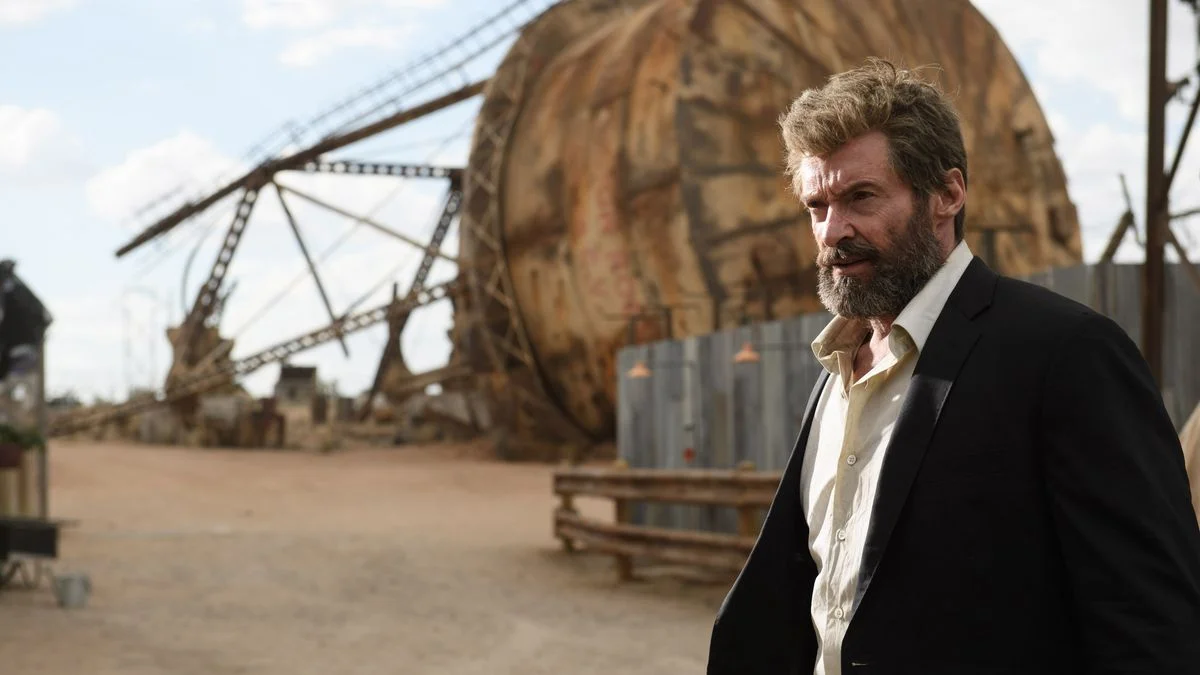
“Logan” is a film directed by James Mangold that features Wolverine (Hugh Jackman) living in the year 2029.  At this point Wolverine has gotten pretty old.  He has a grey beard and works as a limo driver in El Paso, Texas.  Wolverine is laying low because mutants are not allowed in the United States, but they have also stopped being born and are on the edge of extinction.  Aside from driving the limo, Wolverine is caring for Professor Charles Xavier (Patrick Stewart).  Sadly, Professor X has some kind of degenerative brain disease that induces seizures.  Because of Professor X’s superpowers, these seizures are extremely dangerous and can kill human beings.  Therefore Wolverine keeps him inside an old water tankard just across the border in Mexico.  Also residing on the hidden property is the sickly, lanky, albino mutant Caliban (Stephen Merchant) whose skin sizzles if exposed to direct sunlight.  To make matters worse, the adamantium that was fused to Wolverine’s bone structure during the Weapon X program is slowly poisoning him.  The Wolverine in “Logan” is not the agile, fast-healing dominant force from previous films.  In an opening scene where some Mexican gangsters try to steal the tires off of Wolverine’s limo, he sustains several shotgun blasts that seem to almost kill him.  The almost post-apocalyptic setting of “Logan” is incredibly dismal, yet offers a far sharper and grittier feel than any superhero film of recent memory. 

The main plot gets under way when Wolverine is wrangled into driving a mutant girl named Laura (Dafne Keen) from Texas to North Dakota.  Laura was created in a laboratory along with a bevy of other mutants to be used as weapons by the malicious “Transigen” corporation.  The kids are cloned using DNA from other mutants.  In fact, Laura is technically Wolverine’s daughter.  Like her father, Laura has claws, regenerative healing, and an adamantium infused skeletal structure thanks to Transigen.  However, as the experiment proved too uncontrollable Tansigen decided to terminate the subjects.  A nurse in the facility helps Laura escape and reaches out to Wolverine who reluctantly agrees to help.  Throughout the rest of the film Wolverine, Professor X, and Laura are relentlessly chased by the villainous doctors and henchmen from Transigen. 

As ridiculous as it all sounds, “Logan” has an air of seriousness from start to finish.  The R-rated effects lend to a shockingly gory adventure, especially for a superhero film.  The violence ranges from Wolverine decapitating his enemies to Laura sucking bullets out of her arms as they regenerate. Further adding to the stern tone of the film is the lack of shiny tech that was a staple of past “X-Men” movies.  Long gone is the high-tech “X-Jet” and mutant-tracking “Cerebro”.  In “Logan”, it seems Wolverine and the rest of the mutants are truly on their last leg.  Under Mangold’s direction “Logan” is a unique superhero film that defies the genre conventions in a myriad of different ways.  However, the film is way too complicated for an average viewer to indulge.

For example, how many people know that Wolverine’s given name is James Howlett?  How many people know the intricacies of Wolverine’s origin story?  How many people know about Caliban or “what happened in Westchester”?  As much as “Logan” offers in ingenuity, it squanders by soaking the plot in intricate comic-book history.  Just figuring out the basics of the plot in “Logan” requires what amounts to hours of research on Wikipedia.  Maybe die-hard fans of X-Men comics may love the film but it doesn’t translate to the knowledge of an average viewer.

As a fan of the original series, “Logan” was tough to enjoy despite being a well-made film. When I saw those older movies as a kid I wanted to be Wolverine.  I remember collecting the promotional Slurpee cups at 7-Eleven and even dressing up in the absurd looking X-Men jumpsuit so I could be Wolverine for Halloween.  Part of what made and still makes Wolverine so cool is that he is the focal point of the “X-Men” but is so low-key about it that for the first three films he hid under the team name.  Furthermore, the Wolverine of past films always had this gritty swagger that set him apart from other superheroes like when he was introduced in 2000’s “X-Men” with a cage-fighting scene.  But perhaps the most important aspect of Wolverine’s “coolness” was that he was the reluctant leader.  His deep sense of integrity always led him to do what was right even if he didn’t want to. 

            In “Logan”, all but one of those attributes has vanished.  Wolverine is the lone-star of the film and he is a shade of his former self.  However, Wolverine still has his iron-will.  It is fitting that Johnny Cash’s somber ballad “The Man Comes Around” plays as the end credits of “Logan” roll.  Although many of the themes in the film are less than subtle, such as big corporation abuses and a corollary between Trump’s stances on immigrants flipped toward mutants, there is one that quietly shines out the rest.  In one scene Professor X and Laura sit in a hotel room in Oklahoma City watching the 1953 western, “Shane”.  Professor X explains to Laura some throwaway nostalgia about how he saw the movie in theaters as a child.  However with the classic western, Mangold subtly draws a corollary to Wolverine, as Shane was also a lone-wolf kind of hero.

            Ultimately, “Logan” sets an impressive precedent for superhero films with references to film history and a serious tone.  However, it fails to translate to a wide audience due to an overdose of comic book factoids that dominate the plot.  Wolverine is a gruff, to the point individual; his final film should reflect that attitude.

March 07, 2017 /Robert Doughty
Comment

"John Wick: Chapter 2" Review

March 01, 2017 by Robert Doughty

OP-ROB RATING: STARTER

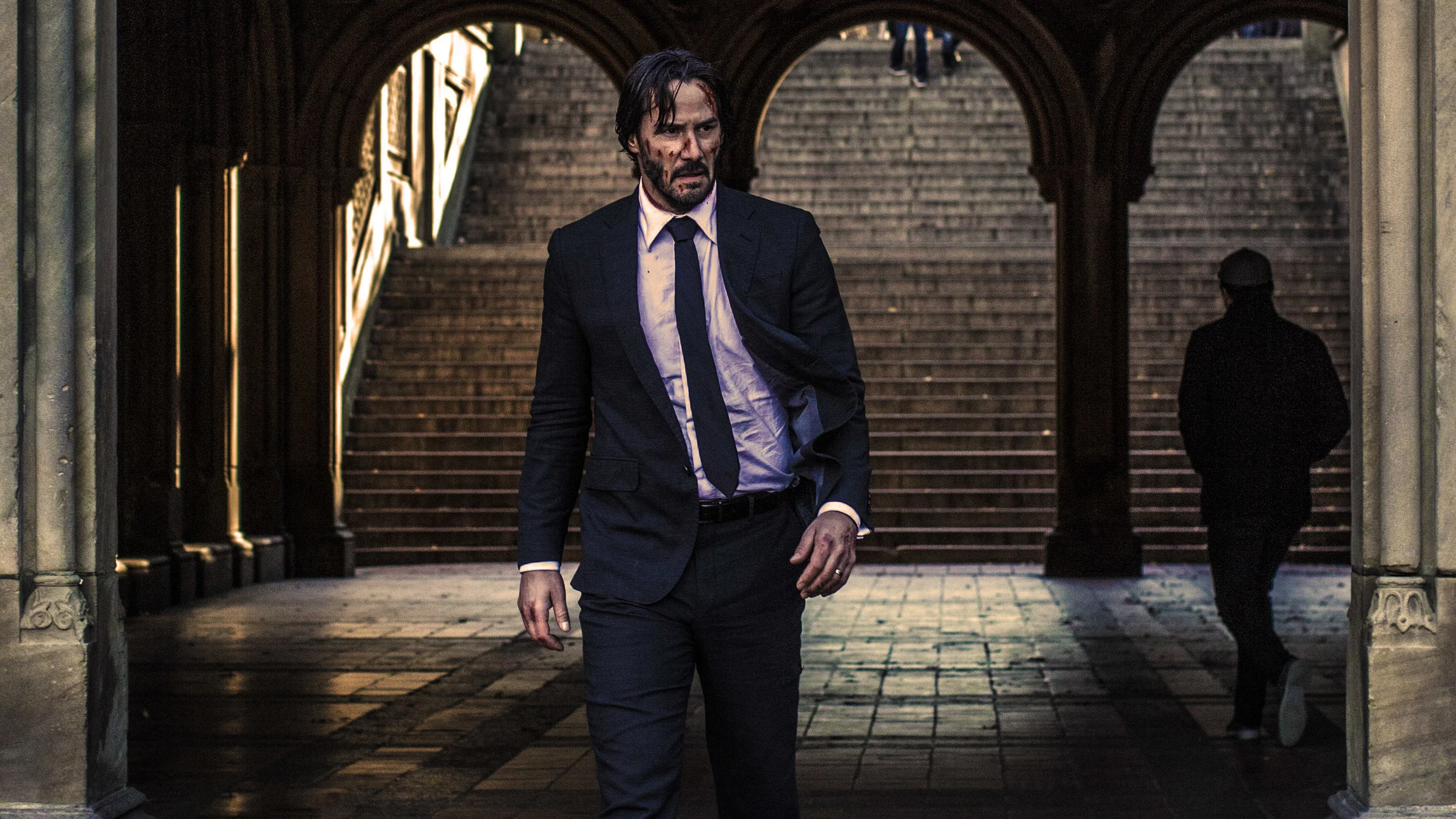
Directed by Chad Stahelski, “John Wick: Chapter 2” is a sequel to the 2014 film “John Wick”.  In the first film Keanu Reeves stars as John Wick, an emotionless ex-assassin who goes on a revenge-fueled killing spree after a group of punk Russian gangsters steal his car and murder his dog.  Wick’s retirement is disturbed again in this second chapter.  A man named Santino D’Antonio (Riccardo Scamarcio) shows up at Wick’s house and presents him with an assignment. One that Wick took a blood oath to fulfill.  When Wick staunchly refuses to undertake the assignment, D’Antonio responds by demolishing his house with a grenade launcher.  Wick survives the attack and makes his way into New York City where he gets in touch with his network of assassins called “The Continental”.  Winston (Ian McShane), the rule obsessed leader of the NYC branch of The Continental, tells Wick that he must fulfill D’Antonio’s assignment.  Bound by the rules, Wick reluctantly reaches out to D’Antonio who tells him to assassinate his sister Gianna D’Antonio (Claudia Gerini) so that he can claim her seat at “the High Table”, some kind of epic crime-lord syndicate.  The recurring joke in the “John Wick” series is that he just wants to retire, but is yanked out of peace again and again either to complete a mission or get vengeance.  This time he is tasked with both.

The assassination and its repercussions unfold throughout the rest of the film, and frankly, the plot is not all that spectacular.  Perhaps the best compliment that can be given to “John Wick: Chapter 2”, is that as a film it is incredibly self-aware.  Unlike many action-thrillers that flop because of a convoluted plot and over-seriousness, “John Wick: Chapter 2” embraces its flaws and turns them into positives.  For example, Keanu Reeves is well known as a comically bad actor.  Instead of juking around this fact, the film turns John Wick’s emotionless attitude into comedy at several points.  In one scene Wick fights another assassin on the NYC metro.  Wick manages to stick a knife into the man's chest and promptly eases him into a seat saying, "the blade is in your aorta. You pull it out and you will bleed and you will die. Consider this a professional courtesy."  The scene and dialogue are ridiculous, but never pretend not to be.

Another area in which “John Wick: Chapter 2” bests the flaws of the genre is with the action scenes.  There is a kind of logic in them that would seem obvious, but that many action-thrillers miss.  One simple observation is that John Wick actually shoots people.  If Wick has bullets, he will use them as a first option.  This separates him from the lot of action-stars that seemingly forget they have guns half the time.  The action scenes flow better as a result of Wick’s efficiency as he rarely gets bogged down fighting people hand-to-hand. 

Finally, “John Wick: Chapter 2” utilizes a chorus of character-actors to keep the film fresh and entertaining when Wick isn’t blasting his way through guys trying to kill him.  Ian McShane’s signature snideness is perfect in Winston, who seems to be somewhat entertained by Wick’s misfortunes.  Former rapper Common plays Cassian, one of the main assassins Wick has to fight.  To top them all is “The Bowery King”, a lower Manhattan-dwelling underground crime boss played by Laurence Fishburne.  All of these characters lend to the “World of Wick” in which assassins lurk around every corner and epic firefights can occur anywhere from the streets of Times Square in New York City to the Capitoline Hill in Rome. 

Ultimately, the only things separating the “John Wick” franchise from being a truly great action-thriller brand is a better soundtrack and a slightly thicker plot.  For now, the series stands as an entertaining one-and-done kind of event; it is not the kind of film you revisit over and over.  All things considered, criticizing “John Wick: Chapter 2” for not being artistic enough would be missing the point.  As Wick says in one scene when he asks the Bowery King for help, “Do you want a war? Or do you just want to give me a gun?” So I ask moviegoers, do you want more depth from an action-thriller starring Keanu Reeves?  Or do you just want to let him do what he does best?  I know what my answer is.

March 01, 2017 /Robert Doughty
Comment

Boogie and The Big E

February 22, 2017 by Robert Doughty

Two days ago, DeMarcus “Boogie” Cousins was traded from the Sacramento Kings to the New Orleans Pelicans.  The Kings sent Boogie along with Omri Casspi to NOLA in exchange for Tyreke Evans, Buddy Hield, Langston Galloway, and 2017 first and second round picks.  Many journalists are calling the trade a “heist” on account of the Pelicans.  New Orleans gets a proven superstar while the Kings receive “a three-piece meal at Popeyes”[1].  In my opinion, the trade is a win-win for the Kings and Pelicans.  But it requires a look back at NBA history to see why:

Player comaprison from www.basketball-reference.com

Boogie reminds me a lot of a former player named Elvin Hayes, also known as "The Big E".  Like Boogie, Hayes was a dominant big man. He played in the league for all of the 1970s and into the early 1980s putting up incredible numbers.  Like Boogie, Hayes was traded to a team with an established superstar big man. He was traded from the Houston Rockets to the Washington Bullets who already had Wes Unseld.  Finally, and perhaps most importantly like Boogie, Hayes was a polarizing player.  Fans loved him.  Teammates and coaches hated him.[2] A trainer for the Washington Bullets said, “being around Elvin every day is like a Chinese water torture”[3].  Another writer following the team noted, “he did not spend a single social evening around Washington with a teammate, nor did he do more than eat a few meals with any of them on the road.”[4]  Of course there were exceptions, but Hayes was generally very hard to get along with on and off the court.

In a particularly amusing story from when the Washington Bullets’ Owner Scott Pollin took the team to China, Hayes adamantly refused to get off the bus to look at the Great Wall:

Pollin peered back and asked Hayes if he was coming. "I've seen a big wall before, Mr. Pollin," Hayes told him. Wes Unseld tried to persuade Hayes by telling him the wall was the only man-made structure that can be seen from outer space. To which Hayes responded, "I'm never going into outer space." [5]

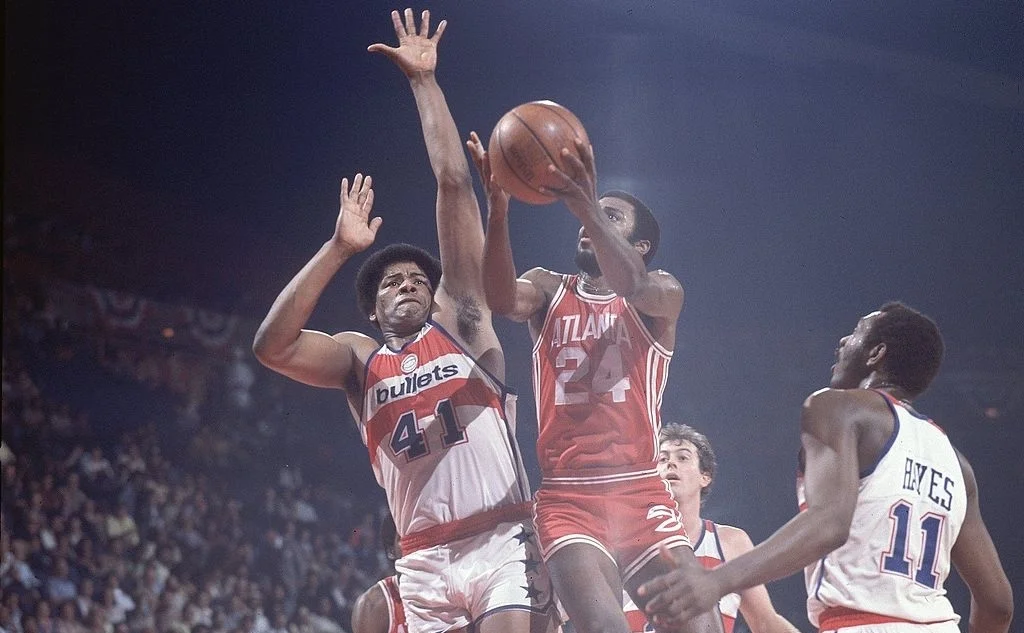
In this situation Hayes resembles a stubborn middle-schooler on a field trip.  It speaks volumes that Hayes couldn’t even cozy up to Wes Unseld, one of the most revered men in NBA history.  But here's the thing: Hayes and Unseld led the Bullets to win their one and only NBA championship in 1978.

Unseld #41 on the Left, Hayes #11 on the Right

Seeing the incredible similarities between the Big E, Boogie and their situations, the Kings-Pelicans trade can be seen in a new light.  In New Orleans Cousins will be paired with Anthony “The Brow” Davis, one of the most renowned personalities and rising superstars in the league.  They will be the first pair of teammates with averages of 20 ppg and 10 rpg since Tim Duncan and David Robinson in the 97-98 season.  This is by all means an extraordinary opportunity for the Pelicans to win big if they can secure the 8 seed in the West (they currently sit 2.5 games back from that position).  It would be a treat for NBA fans everywhere to see Boogie and the Brow wreak havoc on Zaza Pachulia, JaVale McGee, and Draymond Green down on the block for at least four games in the playoffs.

For the Sacramento Kings, the value of Tyreke Evans, Langston Galloway, and Buddy “Buckets” Hield can be debated.  I think that a three-piece meal at Popeyes might be a little harsh of a comparison.  The first round pick they acquired would lose a whole lot of value if the Pelicans were to rip off a huge win streak and bulldoze their way into the playoffs. But regardless of what happens in New Orleans, I believe that Sacramento has won in this trade.  They get a fresh start with several young players and another pick in the 2017 NBA draft.  The Kings have been building around DeMarcus for years and haven’t had a winning season for over a decade.  Shedding a potentially toxic player gives them the breathing room to truly start anew.

For the Pelicans things may not pan out. DeMarcus Cousins is known to be a potentially destructive personality on and off the court.  Whether it is abusing journalists in the locker room[5], taking cheap shots at players during games[6] [7], or leading the entire league in technical fouls (Boogie has been in the top-5 in techs every year since 2013)[8], he has earned himself a foul reputation.  There is a decent chance that Cousins and Davis don’t click, and the team implodes.  But even if this happens the Pels don’t have to re-sign Boogie after the season.  It would have been an experiment worth trying.

Looking back, if Boogie is the modern Big E, then perhaps Anthony Davis can play the role of the modern Wes Unseld.  After all, Unseld and Hayes did not get along personally but managed to win regardless.  As Unseld explained to one journalist:

"I don't dwell within Elvin. I don't know what he's thinking and I don't care. The person I know is the basketball player, and right now he is one of the best in the league. What he's done verifies that. We've had more than our share of run-ins off the court. But when he's on the court he's a professional and that's all that matters."[9]

For the Pelicans and Davis’ purposes, Boogie Cousins is certainly one of the best players in the league.  Let’s see what they can do with him on board.

References:

[1] https://theringer.com/demarcus-cousin-trade-effects-sixers-bulls-jimmy-butler-celtics-bc7e5af236ff#.b2oas81as

[2] http://nypost.com/2012/01/08/petulant-stars-nothing-new-in-nba/

[3] http://www.nba.com/history/players/hayes_bio.html

[4] http://www.si.com/vault/1978/10/16/823065/the-big-e-wants-an-mvp-washington-forward-elvin-hayes-has-his-records-and-at-long-last-an-nba-title-now-hed-like-a-little-respect

[5] http://www.washingtonpost.com/wp-dyn/content/article/2007/10/17/AR2007101702218.html

[5] http://www.cbssports.com/nba/news/demarcus-cousins-confronts-local-columnist-in-locker-room/

[6] https://www.youtube.com/watch?v=CifxHpQWc_0

[7] https://www.youtube.com/watch?v=lQPBSI0W9o4

[8] https://www.teamrankings.com/nba/player-stat/fouls-technical?rate=season-totals&season_id=214

[9] http://www.si.com/vault/1978/10/16/823065/the-big-e-wants-an-mvp-washington-forward-elvin-hayes-has-his-records-and-at-long-last-an-nba-title-now-hed-like-a-little-respect

February 22, 2017 /Robert Doughty
Comment
  • Newer
  • Older

Powered by Squarespace