
"Hamlet" (1996) Review
OP-ROB RATING: ALL-NBA
When someone recommends a movie, I do my best to honor my “I’ll add it to my list” reply and, if readily available, watch it in short order. But when that movie is a four hour Shakespeare adaptation? It is an order of greater magnitude, only completed at the behest of two great American’s and adherents of “Cura Personalis”. Shakespeare adaptations represent a sizable genre in which I have little experience, and admittedly, little inherent interest. In fact, stage-to-screen movies overall are not my favorite. There’s usually a stiltedness to the dialogue that feels somewhat unnatural to the big screen. All this to say that expectations were tempered, and spirit low, going into Kenneth Branagh’s 1996 unabridged version of “Hamlet”.
Like many great works, William Shakespeare’s The Tragedy of Hamlet, Prince of Denmark is something we are introduced to at a premature age. My first interaction with the play was in the 5th grade, when my whole class was required to memorize Prince Hamlet’s third soliloquy (“To be, or not to be”). At that point in life, one cannot really comprehend the language or substance of text; or at least I should hope not! So why does a western education foist these incomprehensible works of literature onto their pre-adolescent students? Perhaps it is for times like these, planting a seed for future growth.
Growth is certainly an apt word to be used to help describe the experience of watching Branagh’s “Hamlet ‘96”. You feel a sense of having learned something academic when the credits roll, and there are elements of the story that are elevated and illuminated by cinematic production. I presume this is the core consideration of any Shakespeare movie… artistic choices are put under a microscope when your audience already knows what will happen. The question is how it will be portrayed. One of Branagh’s tactics here is to intercut dramatic scenes within long speeches. To name a few, there are steamy flashbacks of Hamlet and Ophelia in bed, gruesome depictions of the elder King Hamlet’s murder, and scenes of the Trojan War during the First Player’s recollection of Pyrrhus’ revenge and Hecuba’s grief. Within the often difficult to follow Middle English dialogue, these are an excellent use of the medium, and add to the realization of the play’s more graphic themes. When you might miss what’s going on via dialogue, the intercuts fill the gap.
If you’re like me, revisiting Hamlet for the first time since adolescence, then a plethora of realizations abound. Back in the 5th grade I had never considered how absolutely disgusted Prince Hamlet must have felt seeing his mom jump into marriage with his Uncle Claudius, not two months after the death of his father. Nor had I understood just how scathing Hamlet’s rejection of poor Ophelia was… “get thee to a nunnery!” And then there are the comic bits that soar over an inexperienced youth’s head, like the ridiculous verbosity of Polonius and the lower-class candor of the Gravedigger. I’m not entirely certain that these aspects would be as readily apparent had I just read the play on paperback.
It’s also important to discuss the cast. Though woefully unqualified to critique each actor’s portrayal of their renowned and endlessly studied characters, I’ll do my best to highlight a few. First there is Branagh as Hamlet. The portrayal here is not at all mopey; more bright-eyed and slightly unhinged. Branagh was 35 during filming, and to be honest he feels a bit old. Many of Hamlet’s actions and much of his dialogue are more attuned to a petulant college student than to a middle-aged man. Nonetheless, when it comes to line delivery and enunciation, Branagh is a master. Then we have Derek Jacobi as the villainous Uncle Claudius. Jacobi delivered my favorite portrayal of the primary characters. His performance is exquisitely subtle, as his ambitions shift from attempting to console the grieving Prince Hamlet to covering up the grave crime that made him King of Denmark. The female leads are Julie Christie as Queen Gertrude and Kate Winslet as Ophelia. Christie is subdued, and does well to convey the emotions of a concerned, and shamed mother. Winslet is a different story. Her acting goes from a casual 25mph up to a reckless 150mph when Act 4, Scene 5 hits, full hysteria on display. It’s a bit jarring, and not in a good way.
The rest of the cast is a who’s who of acting legends and Hollywood stars: Jack Lemmon, Gérard Depardieu, Richard Attenborough, Billy Crystal, Robin Williams, Timothy Spall, Rosemary Harris, Charlton Heston, John Gielgud, Judi Dench and so on. For the most part I think these work well, though the big names can sometimes take you out of the movie. A good contrast is Billy Crystal’s scenes as the Gravedigger, which have just the right amount of New Yorker flair; versus Robin Williams showing up as Osric and through no fault of his acting cannot shake his excessive “Robin Williamsness”. They might as well have cast Bugs Bunny.
It’s worth knowing that “Hamlet ‘96” was a box-office bomb, hampered by a limited-release and also no doubt by the 4 hour runtime. This is important because it adds to the “passion project” nature of the movie. Everything in “Hamlet ‘96” feels intricately cared for, not necessarily for our entertainment but out of a “this is how it should be done” sort of mindset. That’s the impression I got. You can also sense a palpable joy from the whole cast; all these legendary actors coming together to create a comparably big-budget adaptation of Shakespeare’s finest. All of that experience and passion, decades and decades worth of training and study, packed into one movie. My greatest fear was that “Hamlet ‘96” would drag. At four hours how could it not? Well, it didn’t. I was whisked scene to scene with such exuberance that one hour flies by like it’s fifteen minutes. Of the many artistic interpretations and acting performances to be praised, perhaps the greatest feat of “Hamlet ‘96” is making an over 400-year-old, infinitely complex literary work feel like a brisk walk in the park.
Highlight of the Game: Hamlet’s 7th soliloquy in Act 4, Scene 4 (“My thoughts be bloody!”). The speech comes as Hamlet witnesses the armies of Norway’s Prince Fortinbras march to battle against Poland, and rues his own inaction with regard to the treachery back in Elsinore. Much like St. Crispian’s Day speech from Shakespeare’s Henry V, the words are electric; and Branagh’s delivery pitch-perfect. There’s a bit of obvious green screen trickery afoot during this scene, but who cares when the content is stirring enough to smash through a brick wall. This one is going in the motivational clip library alongside Ed Reed’s halftime speech and King Théoden’s rally in “The Return of the King”.
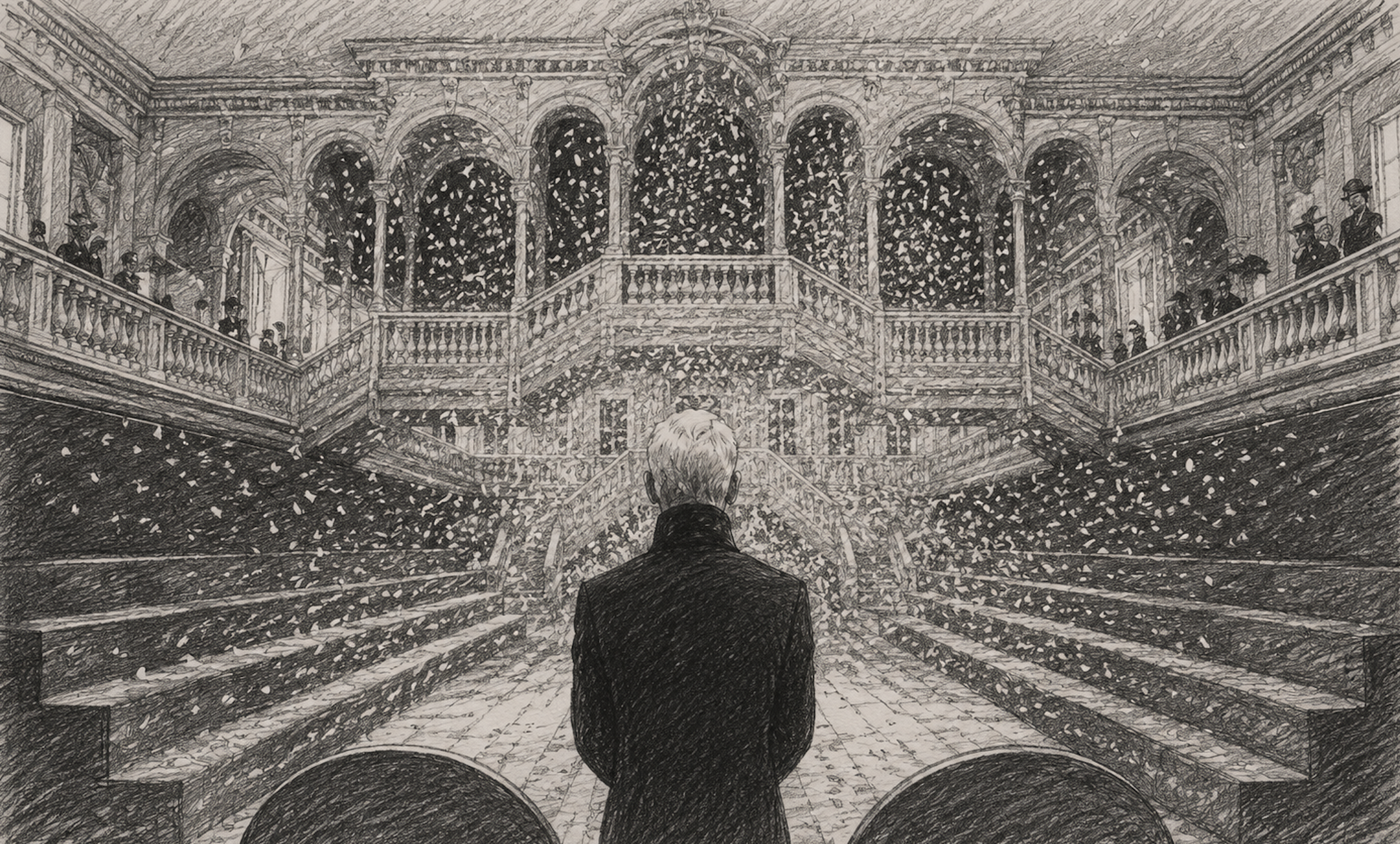
Player of the Game: The interior of Elsinore (a set outside of London) is essential to the movie. It’s a sparkling grand hall with a bounty of royal decorations, railed upper decks, and a bevy of side doors equipped with two-way mirrors. The space is big enough to justify a leap to the big screen, and complicated enough for us to try to figure its ins-and-outs as the plot unfolds.
Costly Turnovers: Nitpick #1 is the hokey lameness of Hamlet’s father’s ghost. Those who heed this review and give “Hamlet ‘96” a chance might bail out after Act 1 Scene 1 for this very reason. It’s low-budget and frankly a pretty rough oversight for what is otherwise a great looking movie. Nitpick #2 is the Danes' pitiful defense of Elsinore at the end of the movie. It’s like they have 10 guys guarding the castle. They clearly had the extras… just didn’t space them out enough.